Chapter VI-A Deductions
Section 80C, 80D, 80E, 80G, and others
- Identify which Chapter VI-A deductions survive in the New Tax Regime
- Master Section 80C's ₹1.5 lakh combined limit and eligible investments
- Understand NPS deduction sub-sections and why 80CCD(2) is uniquely valuable
- Apply deductions for health insurance, education loans, donations, and rent
- Combine deductions optimally using the stacking strategy framework
Chapter VI-A deductions: Section 80C, 80D, 80E, 80G, and others
Chapter VI-A of the Income Tax Act 1961 (Sections 80A through 80U) contains the deductions that reduce Gross Total Income to Total Income. These deductions are the foundation of Old Regime tax planning. For decades, Indian filers organized their savings, insurance, donations, and investments around these sections — particularly Section 80C, which most filers know by name even without understanding tax law.
The Budget 2025 changes have transformed this landscape. In the new tax regime, Chapter VI-A deductions cannot be claimed, except deduction u/s 80CCD(2)/80CCH/80JJAA. For salaried filers earning up to ₹12.75 lakh, the New Regime now offers zero tax through the Section 87A rebate — often eliminating the need for Chapter VI-A deductions entirely. But for filers with higher income, substantial deductions, or specific investment patterns, the Old Regime remains valuable.
This lesson assumes you've read Lesson 1 (basic ITR concepts) and Lesson 3 (five heads of income). The next lesson (Lesson 5) covers the Old vs New Regime choice in detail using the deduction framework established here.
The Income Tax Act 2025 (effective April 1, 2026) consolidates many of these sections under a single Section 123 read with schedule XV, but the substantive deductions remain similar. This lesson uses 1961 Act section references which apply for FY 2025-26 income filed as AY 2026-27.
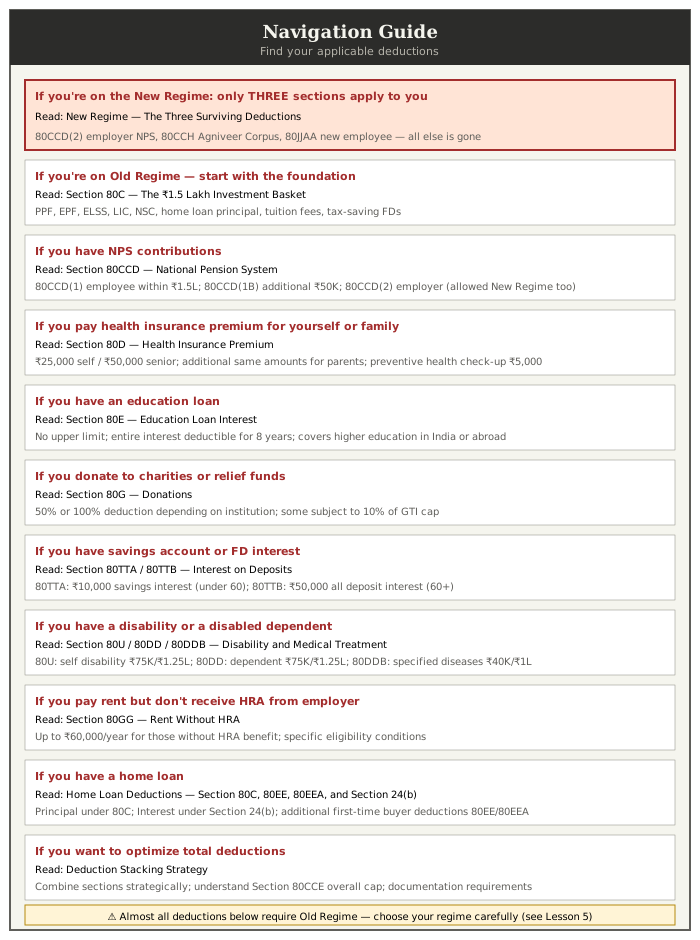
New Regime — The Three Surviving Deductions
Before exploring the Old Regime deductions in depth, understand what's still available in the New Regime. The list is very short.
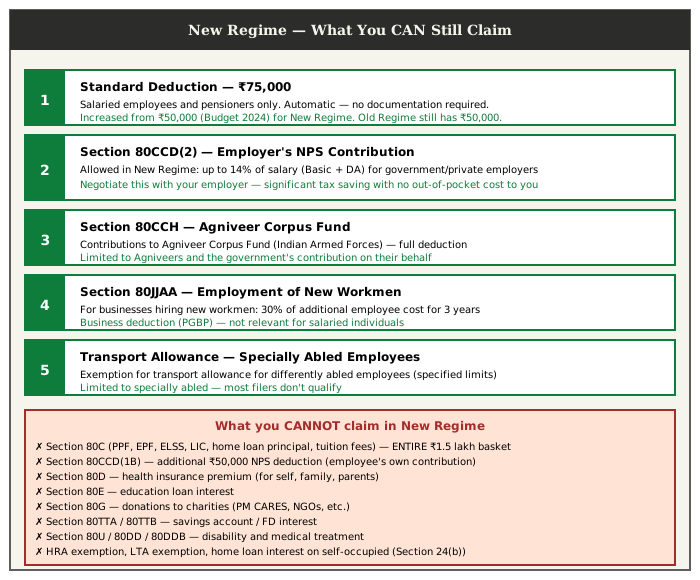
Most Chapter VI-A deductions are not available under the New Tax Regime. This includes the widely used Sections 80C, 80D, 80E, and 80G. Only a few specific benefits remain, such as: Employer's contribution to NPS under Section 80CCD(2). Income from the Agniveer Corpus Fund under Section 80CCH.
Section 115BAC of Income Tax Act 1961; Income Tax Department FAQ confirms Chapter-VIA deductions cannot be claimed in new regime except 80CCD(2)/80CCH/80JJAA.
Section 80C — The ₹1.5 Lakh Investment Basket
Section 80C is the most widely-used deduction in Indian tax — most Old Regime filers max out this section first.
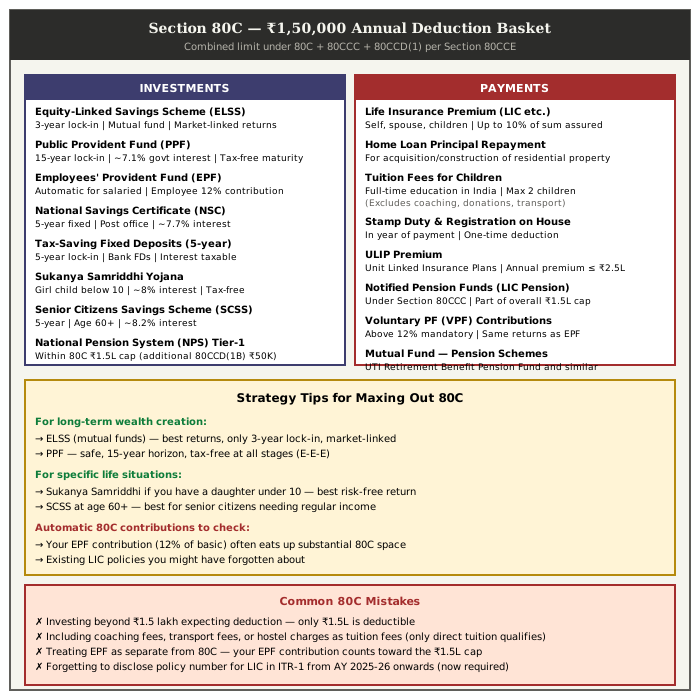
The ₹1.5 lakh combined limit (Section 80CCE). Sections 80C, 80CCC, and 80CCD(1) together cannot exceed ₹1.5 lakh. This is the most important constraint to remember.
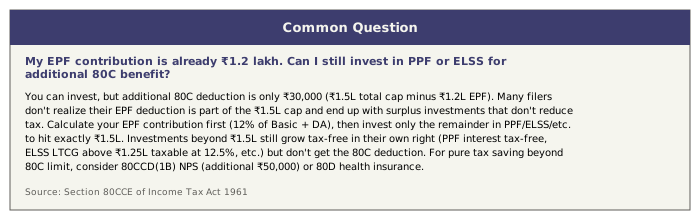
Documentation required. Keep proofs for ITR filing and any subsequent scrutiny:
- LIC: Premium receipts and policy document
- PPF: Passbook with deposits
- EPF: Annual EPF statement
- ELSS: Mutual fund statement showing investment date
- Home loan principal: Certificate from lender
- Tuition fees: Original fee receipts from school/college
- NSC: Certificate of investment
Important AY 2025-26 change. Several investments now require additional disclosure in ITR-1:
- Section 80C: Policy number required for LIC claim
- Section 80CCD: Permanent Retirement Account Number (PRAN) required for NPS
- 80DD: PAN of dependent for disability deduction
Section 80C of Income Tax Act 1961; Section 80CCE (overall cap); CBDT instructions for ITR forms AY 2025-26.
Section 80CCD — National Pension System
NPS has three distinct sub-sections under 80CCD, each with different rules. Understanding the distinction matters for tax planning.
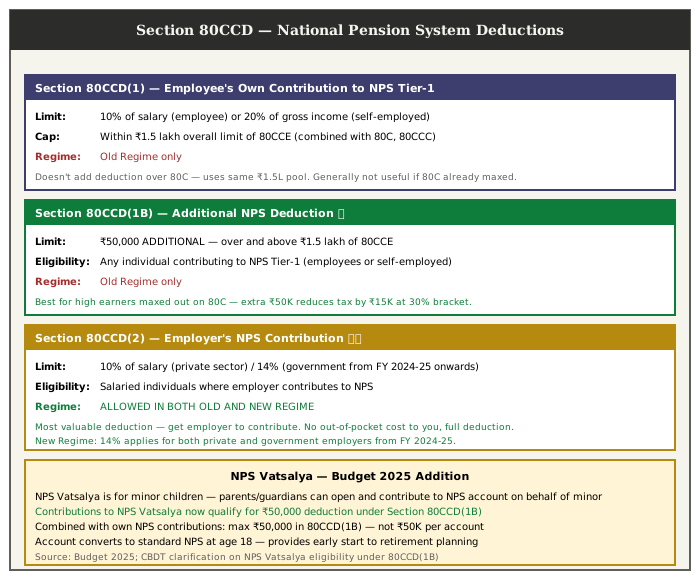
Why 80CCD(2) is special. Most Chapter VI-A deductions disappear under New Regime, but 80CCD(2) survives. If you're on the New Regime, this is the only meaningful tax-deferred retirement contribution route. Negotiate with employer to maximize their NPS contribution within 14% of basic salary — this is essentially free tax benefit.
Employee with ₹15 lakh basic salary on New Regime. Employer's NPS contribution at 14% = ₹2.1 lakh. This ₹2.1 lakh is fully deductible from taxable income. At 30% marginal rate, tax saving = ₹63,000 per year. No out-of-pocket cost to employee.
NPS Tier-1 vs Tier-2. Only Tier-1 contributions qualify for tax deduction. Tier-2 is a voluntary withdrawable account with no tax benefit.
Withdrawal rules.
- 60% can be withdrawn as lump sum at age 60 (tax-free)
- 40% must be used to purchase annuity (annuity income taxable)
- Premature withdrawal: 20% can be withdrawn, 80% mandatory annuity
Section 80CCD of Income Tax Act 1961; Budget 2025 amendments; PFRDA notifications.
Section 80D — Health Insurance Premium
Health insurance premium deduction is the most accessible Old Regime benefit after 80C. Many filers underutilize the full available limit.
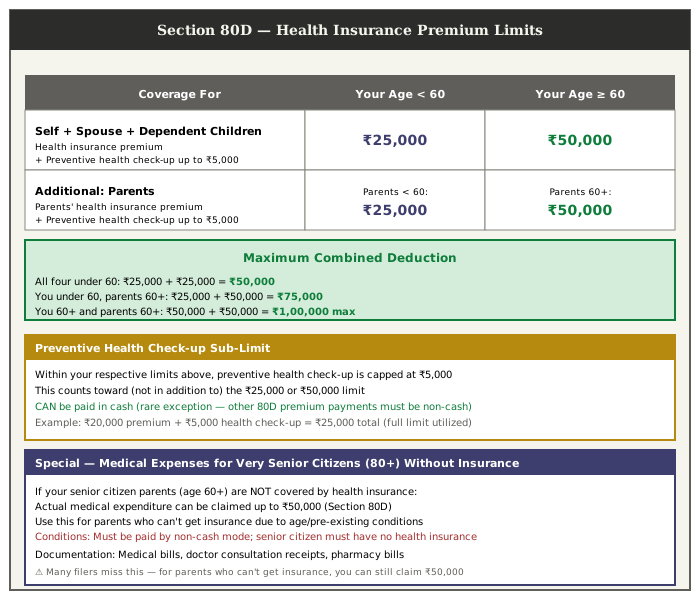
Payment requirements.
- Premium must be paid by non-cash mode (cheque, online transfer, credit card, etc.)
- ONLY exception: Preventive health check-up can be paid in cash
- Premiums for parents can be paid from your account; parents need not be your dependents
HUF separate deduction. A Hindu Undivided Family (HUF) can claim separate 80D deduction for HUF members. Useful for filers running HUF structures.
Insurance policy considerations.
- Group health insurance from employer: Generally premium NOT eligible for 80D (employer pays, no out-of-pocket cost)
- Top-up policies you pay for: ELIGIBLE for 80D
- Critical illness rider: Premium portion attributable to riders may not qualify (verify with insurer)
Section 80D of Income Tax Act 1961; CBDT guidance on health check-up deduction; insurance industry interpretation.
Section 80E — Education Loan Interest
Section 80E provides an unusual benefit — interest deduction with no upper monetary limit.
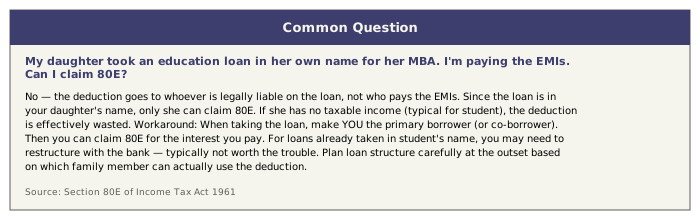
The deduction. Interest paid on education loan taken for higher education is fully deductible from Gross Total Income. No upper limit on the amount.
Eligibility.
- Loan must be from a financial institution (bank) or approved charitable institution
- For higher education of self, spouse, children, or a student for whom you are a legal guardian
- "Higher education" = any course pursued after passing 12th standard or its equivalent
- Education can be in India OR abroad
- Available for 8 consecutive assessment years from the year repayment begins (or until interest paid off, whichever earlier)
What qualifies as "higher education."
- Graduate courses (BA, B.Com, B.Tech, MBBS, etc.)
- Post-graduate courses (MA, MBA, M.Tech, MD, etc.)
- Professional courses (CA, CS, ICWA, etc.)
- Vocational courses recognized by relevant authority
What does NOT qualify.
- Loans for school education (below 12th)
- Loans from non-financial institutions (relatives, employer, etc.)
- Principal repayment (only interest is deductible)
- Pre-recognised correspondence courses (verify case-by-case)
8-year window. Starts in the year you begin repaying the loan (interest payments). Continues for 8 consecutive years OR until full interest is repaid, whichever is earlier. If education takes longer and repayment is delayed, this can result in losing the benefit.
Documentation.
- Loan sanction letter from bank
- Annual interest certificate from lender (separately for principal and interest)
- Repayment schedule
- Proof of relationship if loan for relative
Section 80E of Income Tax Act 1961; CBDT guidance on education loan deduction.
Section 80G — Donations
Section 80G provides deduction for donations to specified charitable institutions. The percentage and limits vary by institution type.
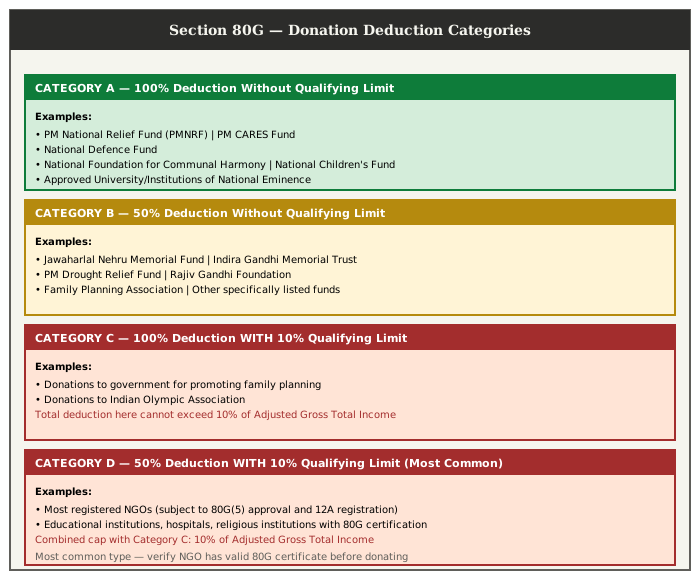
Critical requirements.
- Donation must be to an institution with valid 80G(5) certificate
- Cash donations above ₹2,000 are NOT deductible — use cheque, online transfer, etc.
- Donations in kind (food, clothes, blankets) are NOT deductible — only monetary
- Donee must furnish Form 10BD/10BE certificate with PAN of donor
Form 10BE — donor's certificate. Since FY 2022-23, NGOs file Form 10BD with the IT Department reporting all donors. The donor then receives Form 10BE (the certificate). This certificate is needed for claiming 80G — without it, claim may be denied.
Schedule 80G in ITR. From AY 2025-26, ITR forms require detailed donation reporting:
- Name of donee
- PAN of donee
- Address
- Amount donated (cash mode separately)
- Eligible deduction amount
Section 80G of Income Tax Act 1961; CBDT Notification on Form 10BD/10BE; ITR form instructions AY 2025-26.
Section 80TTA / 80TTB — Interest on Deposits
These sections provide modest but easy deductions for interest income from deposits.
Section 80TTA (For individuals under 60).
- Deduction up to ₹10,000 per year on interest from SAVINGS BANK ACCOUNT only
- Does NOT cover FD interest, RD interest, or other deposits
- Applies to savings accounts in banks, co-operative banks, post offices
Section 80TTB (For senior citizens, age 60+).
- Deduction up to ₹50,000 per year on interest from ALL deposits
- Covers savings, FD, RD, post office deposits, co-operative society deposits
- Replaces 80TTA for seniors (cannot claim both)
- Senior and super-senior citizens can claim a deduction of up to ₹50,000 on interest income under Section 80TTB, and this is allowed even in the new tax regime
While most Chapter VI-A deductions disappear in New Regime, there's been some interpretation flexibility for senior citizens. Verify with CBDT guidance for the specific year. Generally treat as Old Regime deduction unless specific CBDT clarification applies.
Sections 80TTA, 80TTB of Income Tax Act 1961.
Section 80U / 80DD / 80DDB — Disability and Medical Treatment
These three sections address tax benefits for disability and medical treatment situations.
Section 80U — Disability of the Assessee (Self).
- ₹75,000 deduction for individuals with disability (40% or more)
- ₹1,25,000 deduction for individuals with severe disability (80% or more)
- Requires Medical Certificate from notified medical authority
- Not a reimbursement — flat deduction regardless of actual expenditure
Section 80DD — Disabled Dependent.
- ₹75,000 deduction for maintenance of dependent with disability (40%+)
- ₹1,25,000 deduction if dependent has severe disability (80%+)
- "Dependent" = spouse, children, parents, brothers, sisters
- Dependent must not have claimed 80U themselves
- Includes expenditure for medical treatment, training, rehabilitation, and amounts paid for insurance policies for the dependent
Section 80DDB — Medical Treatment of Specified Diseases.
Deduction for actual expenditure on medical treatment of:
- Self
- Dependent
Specified diseases include cancer, AIDS, neurological diseases, chronic renal failure, hematological disorders, thalassemia
Limits:
- Under 60: Up to ₹40,000
- 60+: Up to ₹1,00,000
- Reduced by any reimbursement received from insurer or employer
Documentation requirements.
- 80U: Medical certificate in Form 10-IA from competent medical authority
- 80DD: Form 10-IA + receipts of expenditure
- 80DDB: Prescription from specialist in Form 10-I + payment receipts
Sections 80U, 80DD, 80DDB of Income Tax Act 1961; CBDT notification on specified diseases.
Section 80GG — Rent Without HRA
For filers who pay rent but don't receive HRA from employer (self-employed, employees without HRA component, etc.).
Deduction is the LEAST of:
- ₹60,000 per year (₹5,000 per month)
- 25% of total income (excluding LTCG, STCG)
- Actual rent paid minus 10% of total income
Strict eligibility conditions.
- Must NOT receive HRA from employer
- Must NOT own residential property in city of employment
- Spouse, minor children, HUF must not own house in city of employment (some conditions)
- Must furnish Form 10BA declaration with rent details
Practical reality. With strict conditions and ₹60,000 cap, 80GG provides modest benefit. Most filers eligible for HRA prefer that exemption (potentially much higher). 80GG is for the residual cases.
Section 80GG of Income Tax Act 1961.
Home Loan Deductions — Section 80C, 80EE, 80EEA, and Section 24(b)
Home loans interact with multiple sections — understanding the stacking is important.
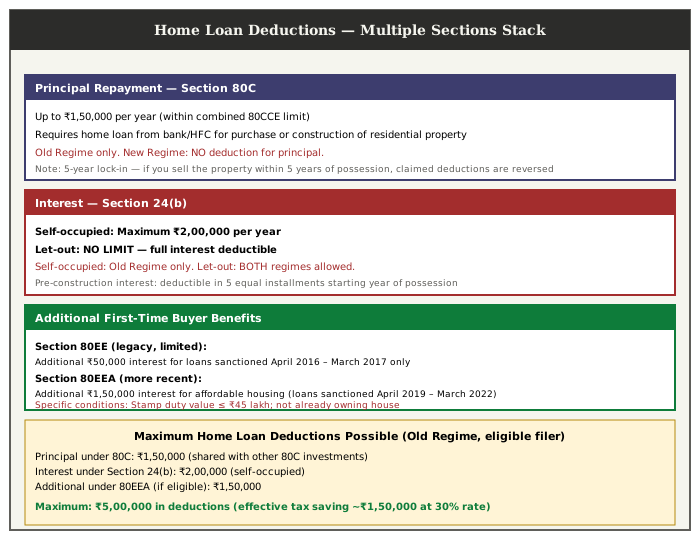
Joint home loan strategy. If both spouses are co-borrowers on home loan and co-owners of property, EACH can claim:
- ₹1.5 lakh principal under 80C (separately)
- ₹2 lakh interest under Section 24(b) (separately)
- Total household deduction: up to ₹7 lakh
- Requires both spouses to have taxable income to absorb the deduction.
Section 24(b) and New Regime — important distinction.
- Self-occupied property interest: NOT allowed in New Regime
- Let-out property interest: ALLOWED in New Regime (but loss set-off restricted)
- This makes New Regime less attractive for filers with significant home loan interest on self-occupied property.
Sections 80C, 80EE, 80EEA, 24(b) of Income Tax Act 1961.
Deduction Stacking Strategy
How to combine deductions optimally for maximum tax benefit.
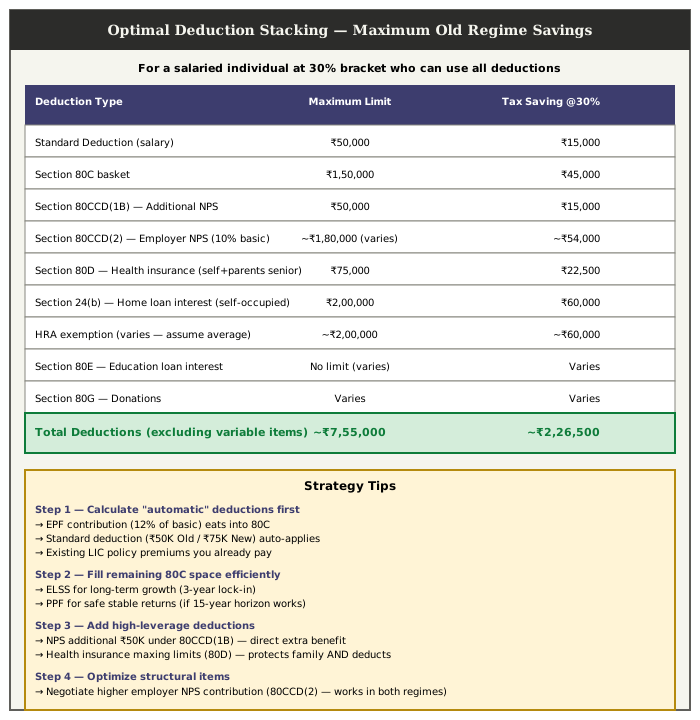
The breakeven point. When does Old Regime become better than New Regime? Roughly:
- Income up to ₹12.75 lakh (salaried): New Regime always better (rebate makes it tax-free)
- Income ₹12.75-15 lakh: Depends — close call, usually New unless major deductions
- Income ₹15-20 lakh: Old Regime starts winning IF deductions ≥ ₹3-4 lakh
- Income above ₹20 lakh: Old Regime usually better with substantial deductions
Lesson 5 covers this regime decision in detail with worked examples.
Various sections of Income Tax Act 1961; financial planning literature on Indian tax optimization.
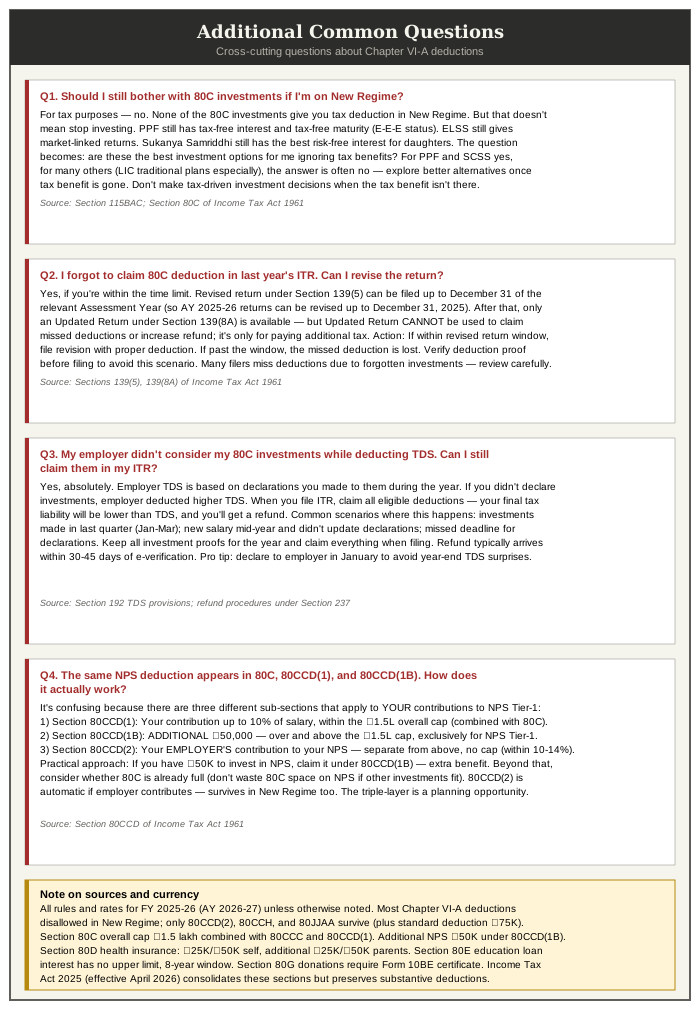
End of lesson — Additional common questions
Key Takeaways
- In the New Tax Regime, only Section 80CCD(2) (employer NPS), 80CCH (Agniveer Fund), and 80JJAA survive — all other Chapter VI-A deductions are disallowed
- Sections 80C, 80CCC, and 80CCD(1) together cannot exceed ₹1.5 lakh under Section 80CCE
- 80CCD(2) employer NPS contribution is the only meaningful tax-deferred retirement route in New Regime — negotiate up to 14% of basic salary
- Cash donations above ₹2,000 are not deductible under Section 80G; Form 10BE certificate from donee is mandatory since FY 2022-23
- Old Regime typically becomes better than New Regime when total deductions reach ₹3-4 lakh for incomes of ₹15-20 lakh
Quiz — 5 Questions
Answer one at a timeWhich of the following Chapter VI-A deductions is available in the New Tax Regime?