Old vs New Regime: Detailed Comparison and Choice
Slabs, rebate, and surcharge mechanics; worked examples at ₹15L and ₹30L; the Section 87A capital gains trap; switching rules; and the step-by-step decision framework
- Understand how slab rates, Section 87A rebate, and surcharge work under each regime for FY 2025-26
- Determine when the New Regime zero-tax sweet spot applies and calculate its exact benefit
- Identify the income range where regime choice matters most and apply the breakeven heuristic
- Recognize the Section 87A capital gains trap and its impact on STCG and LTCG income
- Navigate switching rules and Form 10-IEA requirements for business income filers
Old vs New Regime: Detailed comparison and choice
The single most important tax decision every Indian filer makes each year is choosing between the Old Tax Regime and the New Tax Regime under Section 115BAC. This choice affects everything — your tax rate, your eligible deductions, your filing complexity, and ultimately your take-home income.
Budget 2025 made this choice more interesting than ever. The New Regime now offers zero tax for salaried individuals earning up to ₹12.75 lakh — a dramatic improvement over earlier years. For middle-income filers, this often makes the regime decision straightforward. For higher-income filers and those with substantial deductions, the calculation requires careful analysis.
This lesson builds on Lessons 3 (five heads of income) and 4 (Chapter VI-A deductions) which established what's available under each regime. Lesson 5 brings them together with detailed comparisons, worked examples at multiple income levels, and the decision framework you need.
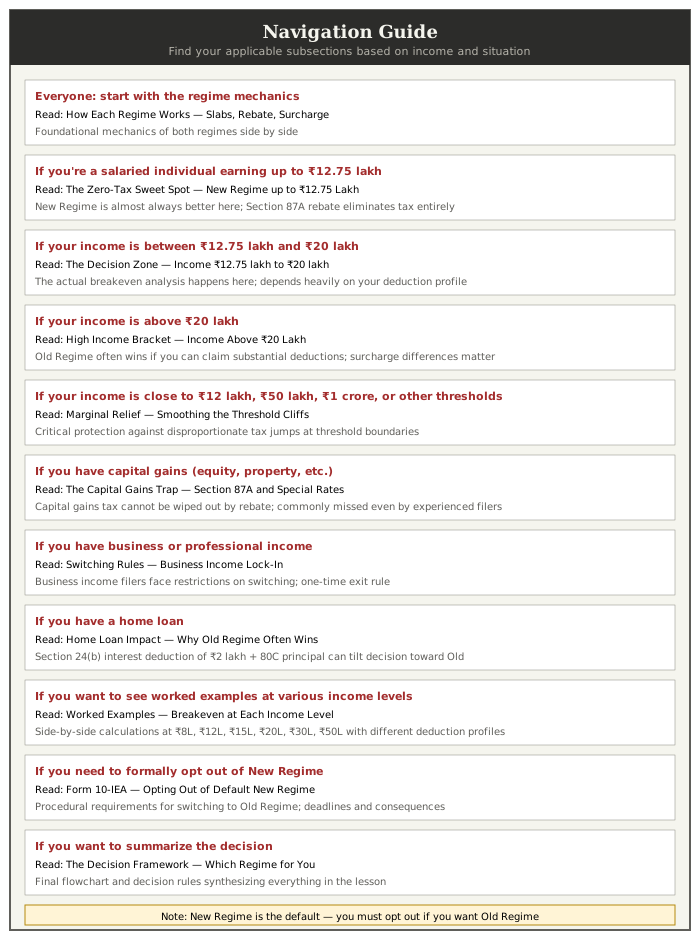
How Each Regime Works — Slabs, Rebate, Surcharge
Before doing comparisons, understand the mechanics of each regime in full detail.
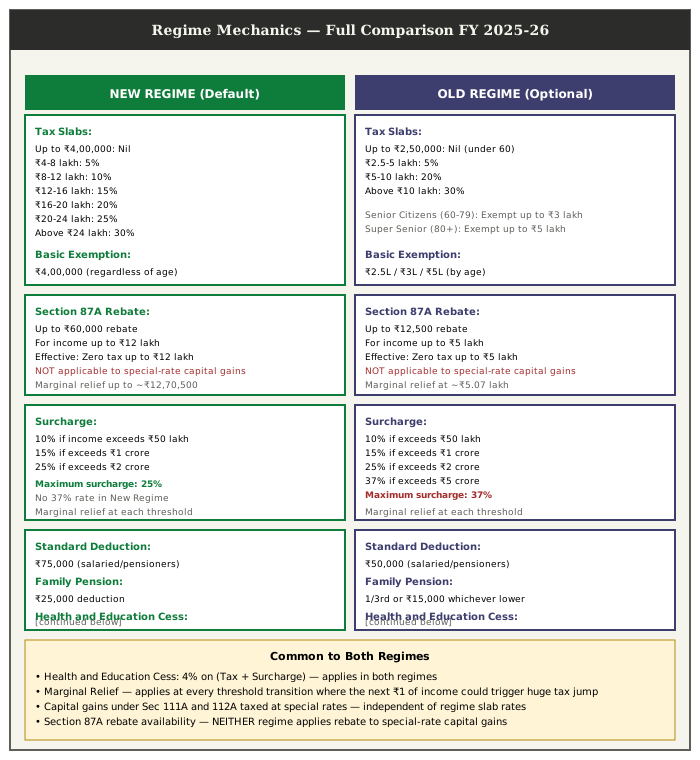
Section 87A rebate confirmed. For FY 2025-26 (AY 2026-27), the 87A rebate under the new tax regime allows resident individuals with taxable income up to Rs. 12 lakh to reduce their tax liability to zero. The maximum rebate amount is Rs. 60,000. Under the old tax regime, the rebate remains at Rs. 12,500 for individuals with taxable income up to Rs. 5 lakh.
Critical: Section 87A doesn't apply to special-rate capital gains. Rebate is not allowed for incomes taxed at special rates such as capital gains under Section 111A and 112A. We cover this trap in detail later.
Section 115BAC of Income Tax Act 1961 (New Regime); Section 87A (rebate); Finance Act 2025; CBDT slab notifications.
The Zero-Tax Sweet Spot — New Regime up to ₹12.75 Lakh
For salaried individuals earning up to ₹12.75 lakh, the New Regime offers what is effectively zero income tax. This is the most significant feature of Budget 2025 and changes regime decisions dramatically for middle-income filers.
Gross salary: ₹12,75,000 Less Standard Deduction (New Regime): ₹75,000 Net taxable income: ₹12,00,000 Tax computation on ₹12 lakh under New Regime slabs. Up to ₹4 lakh: ₹0 ₹4-8 lakh: 5% of ₹4 lakh = ₹20,000 ₹8-12 lakh: 10% of ₹4 lakh = ₹40,000 Total tax: ₹60,000 A note on terminology: The provisions of section 87A are covered under section 156 of the Income Tax Act, 2025. However, for income earned until 31st March 2026 (FY 2025-26), the provisions in the Income Tax Act 1961 needs to be referred. This lesson uses 1961 Act references which apply to FY 2025-26 income filed as AY 2026-27. Section 87A rebate. ₹60,000 — exactly matches tax payable Final tax: ₹0.
For salaried individuals, the ₹75,000 standard deduction further boosts the effective tax-free limit – if your salary is ₹12.75 lakh, after the standard deduction your taxable income is ₹12 lakh, meaning you also pay zero tax.
Even with significant deductions, Old Regime would have: Standard deduction: ₹50,000 Section 80C: ₹1,50,000 Section 80D: ₹25,000 HRA: varies, assume ₹2,00,000 Total deductions: ~₹4,25,000. Gross salary ₹12.75 lakh → Taxable ₹8.50 lakh. Old Regime tax on ₹8.50 lakh = ₹12,500 (₹2.5-5L) + ₹70,000 (₹5-8.5L at 20%) = ₹82,500. 87A rebate doesn't apply (income > ₹5 lakh). Add cess 4%: ₹85,800 tax. vs New Regime: ₹0. New Regime saves ₹85,800 (or whatever Old Regime tax would have been).
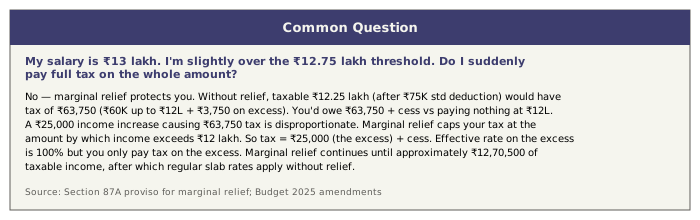
The salaried zero-tax range continues to ₹12.75 lakh. This is the effective sweet spot. Beyond it, regular slab rates plus marginal relief apply, and Old Regime becomes worth considering.
For non-salaried individuals. Without the ₹75,000 standard deduction, the zero-tax limit is ₹12 lakh of net taxable income. Self-employed professionals using presumptive taxation see business income computed at 50% of gross receipts (Section 44ADA) — so professional gross receipts up to ₹24 lakh result in ₹12 lakh business income → potentially zero tax under New Regime.
Section 87A of Income Tax Act 1961; Budget 2025; Under the new tax regime, income up to ₹12,00,000 attracts no income tax because of a ₹60,000 rebate.
The Decision Zone — Income ₹12.75 Lakh to ₹20 Lakh
This is the income range where regime choice actually matters most. Below ₹12.75 lakh, New Regime almost always wins. Above ₹20 lakh, the analysis varies but Old Regime often wins with substantial deductions. The ₹12.75-20 lakh range is the genuine decision zone.
Why the math gets interesting here.
In the New Regime, income above ₹12 lakh starts attracting tax at the slab rates (10% from ₹8-12L, 15% from ₹12-16L, 20% from ₹16-20L). Marginal relief applies up to about ₹12.7 lakh, then regular slab rates apply.
In the Old Regime, the basic exemption is much lower (₹2.5 lakh) and rates jump quickly (20% at ₹5 lakh, 30% at ₹10 lakh). But you can claim substantial deductions. The breakeven depends on how much deduction you can legitimately claim.
For most filers in this range, you need approximately ₹3,75,000 to ₹4,25,000 in total deductions (including standard deduction, 80C, 80D, HRA, home loan interest, etc.) to make Old Regime competitive. Below that level of deductions, New Regime wins.
Worked example — ₹15 lakh salary, moderate deductions.
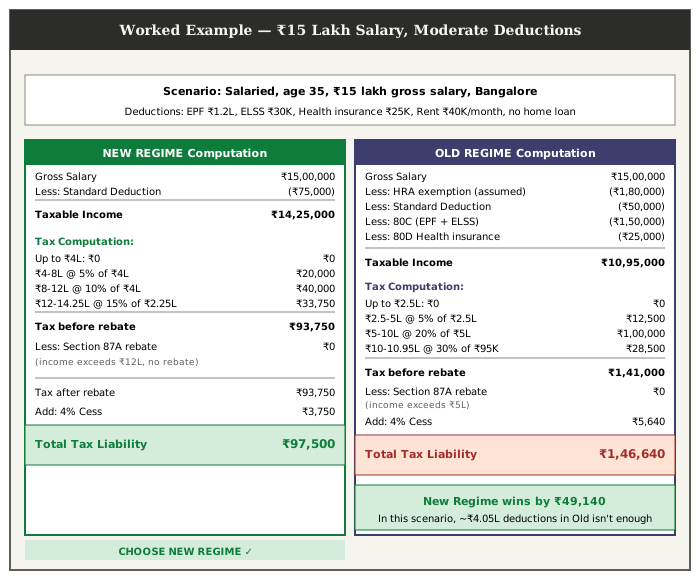
Even with HRA exemption + 80C + 80D, New Regime still wins at ₹15 lakh. To make Old Regime win, you'd need more deductions — typically home loan interest of ₹2 lakh adding meaningfully to the equation.
Add ₹2,00,000 home loan interest deduction under Section 24(b) to Old Regime: New taxable income: ₹10,95,000 − ₹2,00,000 = ₹8,95,000 Old Regime tax: ₹12,500 (₹2.5-5L) + ₹79,000 (₹5-8.95L at 20%) = ₹91,500 Plus 4% cess: ₹95,160 vs New Regime ₹97,500. Now Old Regime wins by ₹2,340 — barely. Home loan moves the needle but only slightly. Higher home loan interest or additional deductions (80CCD(1B), parental health insurance, etc.) tilt further toward Old.
Section 115BAC; standard slab calculation; CBDT instructions for AY 2026-27.
High Income Bracket — Income Above ₹20 Lakh
Beyond ₹20 lakh income, two factors shift the analysis:
- Old Regime starts hitting 30% bracket — but New Regime hits 30% only above ₹24 lakh
- Surcharge becomes a factor above ₹50 lakh
- Deduction value at 30% bracket becomes more significant
The ₹50 lakh surcharge threshold. Both regimes impose 10% surcharge above ₹50 lakh. Marginal relief applies in both. But Old Regime's higher slab rates mean the surcharge applies to a larger base tax amount.
The ₹2 crore and ₹5 crore differences. Above ₹2 crore, both regimes are at 25% surcharge. But Old Regime continues to 37% surcharge above ₹5 crore, while New Regime caps at 25%. For ultra-high earners (above ₹5 crore), New Regime offers structural advantage on surcharge alone.
Assume someone with: Salary: ₹30 lakh 80C full ₹1.5 lakh (mostly EPF and ELSS) 80CCD(1B): ₹50,000 NPS 80CCD(2): ₹3 lakh employer NPS contribution (at 10%) 80D: ₹75,000 (self under 60, parents 60+) HRA exemption: ₹3.6 lakh Section 24(b): ₹2 lakh home loan interest Old Regime computation. Gross salary: ₹30,00,000 Less HRA: ₹3,60,000 Less standard deduction: ₹50,000 Less 80C: ₹1,50,000 Less 80CCD(1B): ₹50,000 Less 80D: ₹75,000 Less Section 24(b): ₹2,00,000 Less 80CCD(2): ₹3,00,000 Taxable income: ₹18,15,000 Tax: ₹12,500 + ₹1,00,000 + ₹2,44,500 (30% of ₹8.15L) = ₹3,57,000 Cess 4%: ₹14,280 Total: ₹3,71,280 New Regime computation. Gross salary: ₹30,00,000 Less standard deduction: ₹75,000 Less 80CCD(2): ₹3,00,000 (only deduction allowed) Taxable income: ₹26,25,000 Tax: ₹0 + ₹20K + ₹40K + ₹60K + ₹80K + ₹1L + 30% of ₹2.25L = ₹3,67,500 Cess 4%: ₹14,700 Total: ₹3,82,200 Difference: Old Regime wins by ₹10,920. Marginal at this income level — the substantial deductions barely overcome the slab rate disadvantage.
At higher income with same deductions. The percentage benefit of Old Regime increases with income because more income falls into the 30% bracket. By ₹50 lakh+, Old Regime typically wins by ₹50,000-₹1.5 lakh in similar scenarios.
Income Tax Act 1961; Finance Act 2025; CBDT tax calculation guidance.
Marginal Relief — Smoothing the Threshold Cliffs
Marginal relief is the tax law's mechanism to prevent disproportionate tax jumps when income just crosses a threshold.
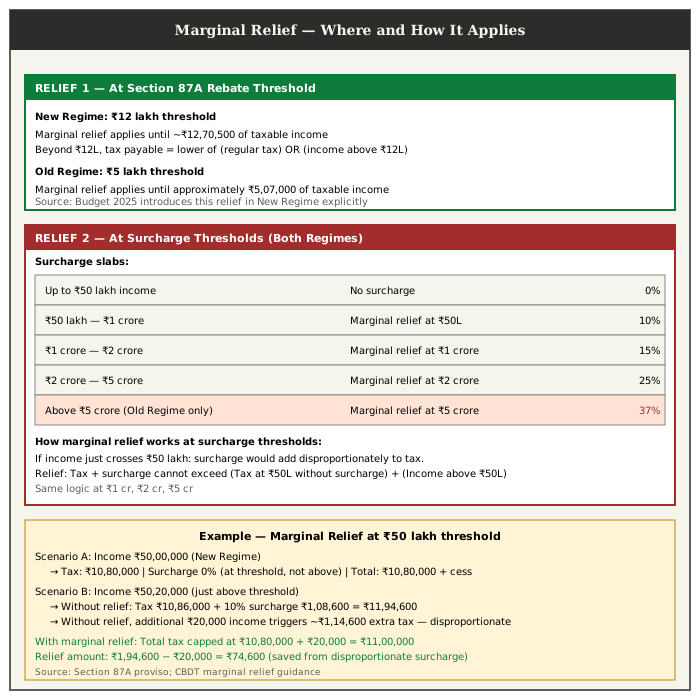
Marginal relief is available in case of New Tax Regime if the income exceeds Rs 7 lakhs from FY 2023-24 and Rs 12 lakhs from FY 2025-26. Marginal Relief is applicable only to Resident individuals. Marginal Relief is applicable upto approximately Rs 7.28 lakhs upto FY 2024-25 and Rs 12,70,500 from FY 2025-26.
Marginal relief is available only to resident individuals. Non-residents don't get marginal relief.
Section 87A first proviso; Finance Act 2025; CBDT marginal relief guidance for surcharge thresholds at ₹50 lakh, ₹1 crore, ₹2 crore, ₹5 crore.
The Capital Gains Trap — Section 87A and Special Rates
This is one of the most commonly misunderstood interactions in Indian tax law, and it traps even experienced filers.
The trap. Section 87A rebate makes income up to ₹12 lakh tax-free under New Regime. Many filers assume this means ALL their income up to ₹12 lakh is tax-free. It doesn't. Rebate is not allowed for incomes taxed at special rates such as capital gains under Section 111A and 112A.
What this means in practice. If you have:
- Salary or business income (taxed at slab rates): Eligible for 87A rebate
- STCG on equity (Section 111A at 20%): NOT eligible for 87A rebate
- LTCG on equity (Section 112A at 12.5%): NOT eligible for 87A rebate
- LTCG on other assets (Section 112 at 12.5%): NOT eligible for 87A rebate
- Lottery winnings (Section 115BB at 30%): NOT eligible for 87A rebate
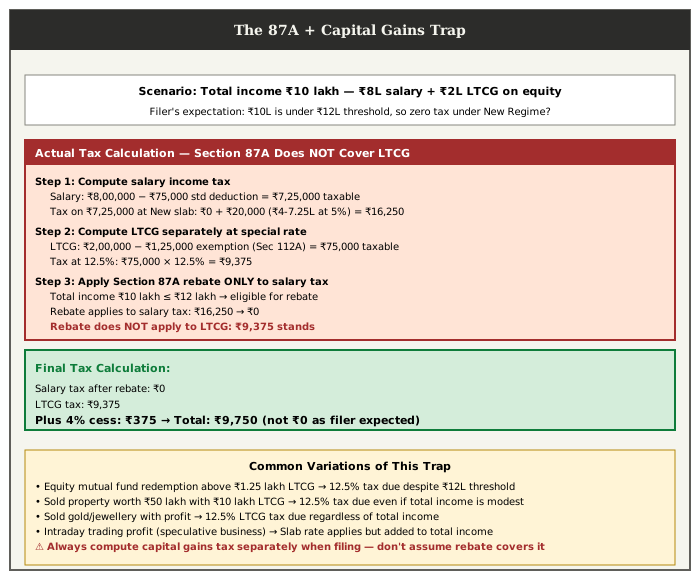
The Section 87A rebate cannot be used to offset tax calculated on incomes taxed at special rates. LTCG (Sec 112A) exemption is ₹1.25L, tax on excess is 12.5%. STCG (Sec 111A) taxed at 20%. Tax on these is payable even if total income is below the 87A threshold.
Some interpretations suggest Old Regime applies rebate more broadly to certain special-rate incomes (though not 112A LTCG, where rebate has never applied). This is contested territory. For conservative compliance, treat 87A rebate as non-applicable to all special-rate capital gains in both regimes.
Sections 87A, 111A, 112A, 112 of Income Tax Act 1961; CBDT clarifications.
Switching Rules — Business Income Lock-In
The rules for switching between regimes differ based on whether you have business or professional income.
Salaried individuals (no business income).
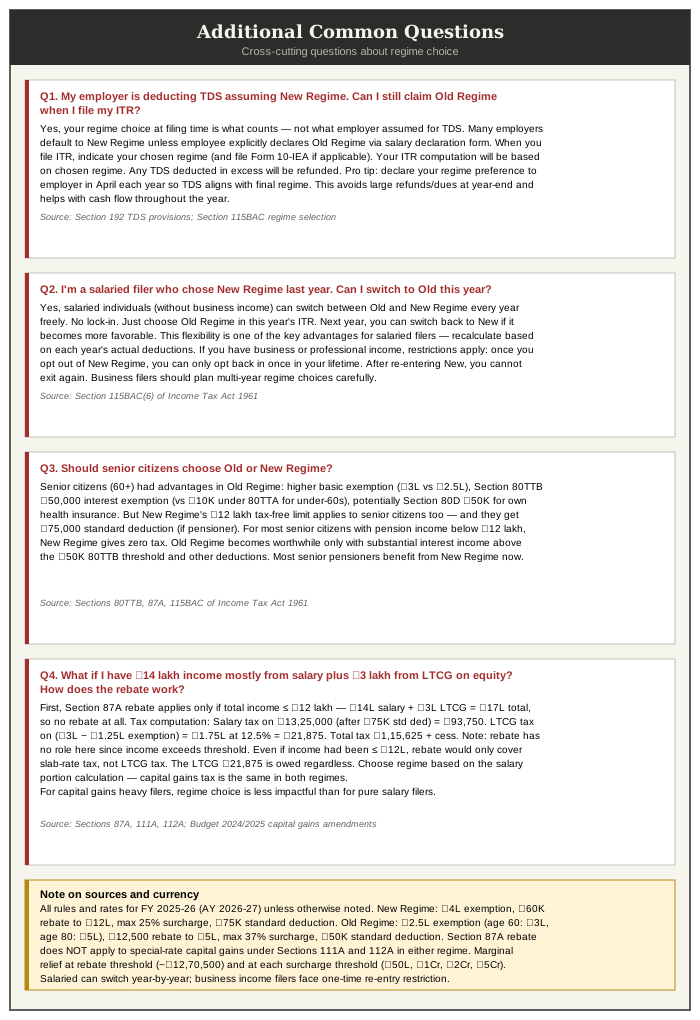
- Can switch between Old and New Regime EVERY year freely
- Choice made when filing each year's ITR
- No formal opt-out form required (Form 10-IEA optional)
- Greater flexibility — recalculate every year
Individuals with business or professional income.
- Once you opt OUT of New Regime, can only opt back IN ONCE in your lifetime
- After re-entering New Regime, cannot exit again
- Form 10-IEA must be filed before due date of return
- Late filing of Form 10-IEA = stuck with default New Regime for that year
Practical implication for business filers.
- If business income is small and infrequent: consider sticking with New Regime to avoid lock-in
- If you opt out of New Regime, do so deliberately understanding you can only re-enter once
- Major life events (starting/ending business, retirement) may warrant strategic regime changes
Section 115BAC of Income Tax Act 1961; CBDT Rule 21AG for Form 10-IEA.
Form 10-IEA — Opting Out of Default New Regime
If you want to use Old Regime, you must formally indicate this in your ITR.
For salaried individuals (no business income).
- Simply indicate Old Regime in the ITR while filing
- ITR-1, ITR-2 have a field "Are you opting out of the New Tax Regime?"
- Select "Yes" → all Old Regime mechanics apply
- No Form 10-IEA required for salaried individuals
For individuals with business or professional income.
- Must file Form 10-IEA online BEFORE filing ITR
- Form 10-IEA must be filed by the due date for filing ITR (July 31 / October 31 / etc.)
- Late filing of Form 10-IEA = default New Regime applies for that year
- Form is available on incometax.gov.in
Information required for Form 10-IEA.
- PAN, Aadhaar, name, address
- Assessment year
- Type of return (Original / Revised)
- Nature of business/profession
- Declaration of opting out
- Verification
Withdrawal of opt-out (returning to New Regime).
- File Form 10-IEA again indicating withdrawal
- Can be done only ONCE in lifetime for business income filers
- Once withdrawn, cannot opt out again
CBDT Rule 21AG and Form 10-IEA; Notification on regime switching procedures.
The Decision Framework — Which Regime for You
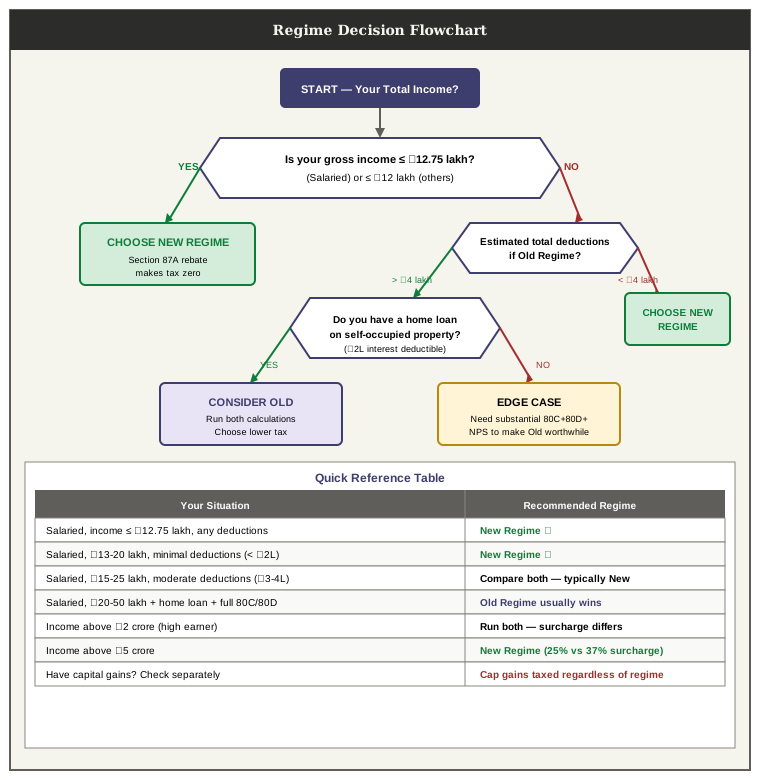
Practical decision steps.
- Calculate total income from all sources.
- If salaried and income ≤ ₹12.75 lakh (or ≤ ₹12 lakh for non-salaried), choose New Regime.
- If income above that threshold, calculate your eligible Old Regime deductions: Standard deduction; HRA exemption (if applicable); Section 80C investments; Section 80D health insurance; Section 80CCD(1B) additional NPS; Section 24(b) home loan interest; Other Section 80 deductions.
- If total deductions exceed approximately ₹4-4.25 lakh, Old Regime starts becoming competitive.
- Calculate tax under both regimes — use Income Tax Department calculator on incometax.gov.in.
- Choose the regime with lower total tax (including cess).
- If business income filer, evaluate carefully — switching is restricted.
Income Tax Department official tax calculator; Section 115BAC of Income Tax Act 1961.
Key Takeaways
- Below ₹12.75 lakh (salaried) or ₹12 lakh (non-salaried), New Regime almost always wins — zero tax applies through the Section 87A rebate of ₹60,000.
- In the ₹12.75–20 lakh range, you need approximately ₹3,75,000–₹4,25,000 in total deductions for Old Regime to become competitive.
- Section 87A rebate does not apply to special-rate capital gains (Section 111A STCG, Section 112A LTCG) — tax on these is payable even if total income is below ₹12 lakh.
- Salaried individuals can switch regimes freely each year; business income filers face lock-in — can only re-enter New Regime once in a lifetime.
- For ultra-high earners above ₹5 crore, New Regime has a structural advantage — surcharge caps at 25% versus Old Regime's 37%.
Quiz — 5 Questions
Answer one at a timeA salaried individual earns ₹12.75 lakh. What is their tax liability under the New Regime for FY 2025-26?