Form 1040 — Dependents Section
Listing dependents drives the Child Tax Credit, the Credit for Other Dependents, and filing status eligibility. The form's table is simple — the rules behind it are not.
- Determine whether a person qualifies as a dependent under the qualifying child or qualifying relative tests
- Complete all four columns of the dependents table correctly
- Identify which dependents qualify for the Child Tax Credit versus the Credit for Other Dependents
- Navigate tiebreaker rules when more than one taxpayer could claim the same dependent
- Apply Form 8332 mechanics for divorced and separated parents
Introduction
Directly below the personal information and filing status section sits the Dependents section. This is where you list the people you're claiming as dependents on your return — usually children, sometimes other relatives, occasionally non-relatives who lived with you all year. Each dependent you list affects your tax in specific ways: some unlock the Child Tax Credit worth up to $2,200 per qualifying child, others unlock the Credit for Other Dependents worth $500 per qualifying dependent, and the dependents affect your filing status eligibility (especially Head of Household and Qualifying Surviving Spouse), the standard deduction options, and various other credits.
The dependents section looks like a small table with rows for each dependent. The structure is straightforward — name, SSN, relationship, two checkboxes — but the rules governing who qualifies as a dependent are substantial. The qualifying child test and the qualifying relative test from IRS Publication 501 have specific requirements that confuse many filers. The tiebreaker rules for divorced or separated parents determine which parent gets to claim a child when both could potentially qualify. And the credits attached to dependents have their own eligibility rules layered on top of the dependent rules.
This lesson walks through the dependents section line by line, explains who qualifies as a dependent under the two tests, covers the CTC and ODC eligibility for each dependent, addresses the most common confusion points inline, and provides career path applications and the document checklist for getting this section right.
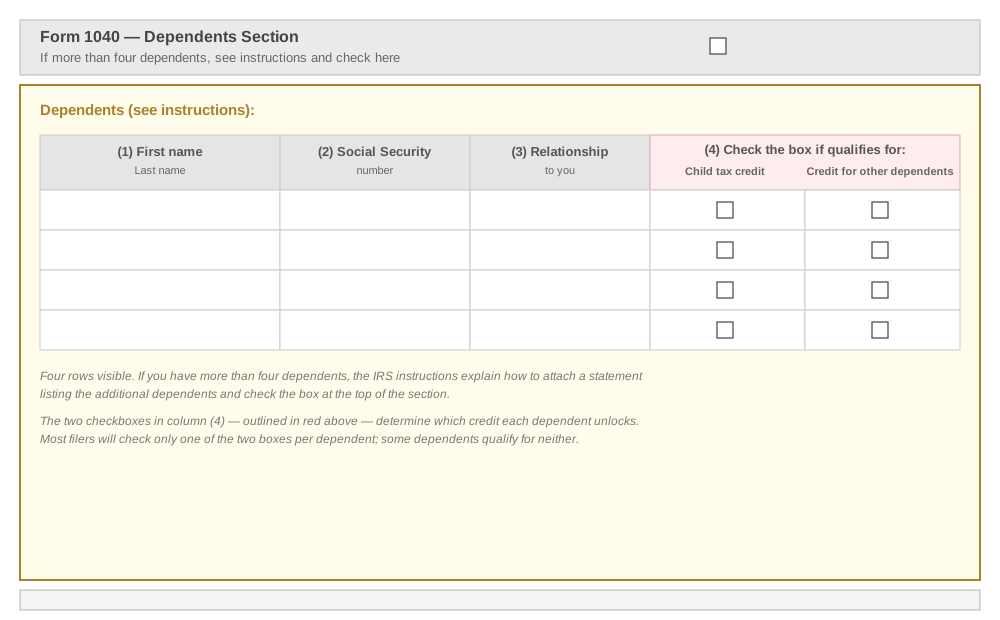
The illustration shows the dependents section as a table with four columns: the dependent's name (column 1), the dependent's Social Security number (column 2), the relationship to you (column 3), and the credit eligibility checkboxes (column 4) which I've outlined in red because that column drives the dollar value of having each dependent on your return.
The form provides four rows for dependents. If you have more than four, the instructions direct you to attach a separate statement listing the additional dependents and check the indicator box at the top of the section. Most filers won't reach the four-dependent limit, but families with multiple children or filers supporting elderly parents in addition to children may need the overflow procedure.
Before we get into the columns themselves, we need to address the foundational question: who counts as a dependent in the first place? The form's columns assume you've already determined that the people you're listing are dependents under IRS rules. The harder work of dependent analysis happens before you write anything in the table.
Who Qualifies as a Dependent
The IRS recognizes two categories of dependents: qualifying children and qualifying relatives. A person who meets all the tests for either category can be claimed as a dependent. Many people fit one category but not the other; some people fit neither and can't be claimed at all. The tests are specific and the IRS audits dependent claims at higher rates than many other return items because of historical misuse.
Qualifying child. A qualifying child is generally a younger family member who lives with you and you support. The five specific tests must all be met:
- The relationship test requires the person to be your child (biological, adopted, stepchild, or foster), sibling (full, half, or step), or a descendant of any of these (grandchild, niece, nephew). Cousins are not qualifying children.
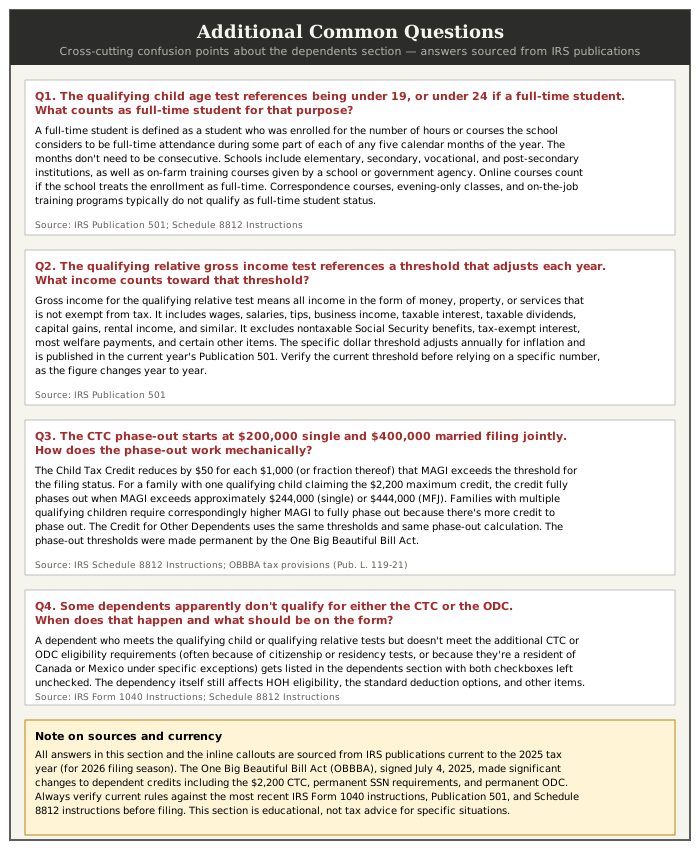
- The age test requires the person to be under 19 at the end of the year, or under 24 if a full-time student for at least five months of the year, or permanently and totally disabled at any age. A person who turns 19 during the year is not a qualifying child for that year unless they're a full-time student.
- The residency test requires the person to have lived with you for more than half the year. Temporary absences for school, vacation, medical care, military service, or detention in a juvenile facility count as time living with you. Children born or who died during the year are treated as having lived with you the whole year if they lived with you for the time they were alive.
- The support test requires the person not to have provided more than half of their own support. This is different from the support test for qualifying relatives. The question is whether the potential dependent provided more than half of their own support — if they did, they're not a qualifying child even if you also provided substantial support.
- The joint return test requires the person not to file a joint return with their spouse (with limited exceptions for situations where the joint return is only filed to claim a refund of withheld tax).
Qualifying relative. A qualifying relative is broader in some ways and narrower in others. The four specific tests:
- The not a qualifying child test requires the person to not be the qualifying child of any other taxpayer. A person who could be a qualifying child of someone else can't be your qualifying relative.
- The relationship or member of household test requires either a specific qualifying relationship (child, stepchild, foster child, sibling, parent, grandparent, aunt, uncle, niece, nephew, certain in-laws) OR that the person lived with you all year as a member of your household. The relationship list is broader than for qualifying child but has its own specific scope.
- The gross income test requires the person's gross income to be less than a threshold that adjusts annually (it's based on the exemption amount). The IRS publishes the current threshold each year in Publication 501. Gross income for this test excludes certain items like nontaxable Social Security benefits.
- The support test requires you to have provided more than half of the person's total support for the year. This is the inverse of the qualifying child support test — here you must affirmatively provide more than half of their support.
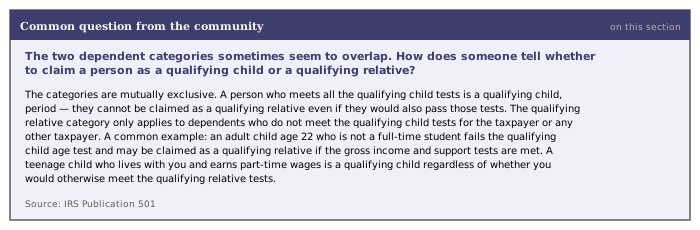
Both tests apply to qualifying relatives. A person who fits the qualifying child tests is a qualifying child, not a qualifying relative, even if they would also pass the qualifying relative tests.
The Four Columns of the Dependents Section
Once you've determined that a person is your dependent under one of the two categories, you list them in the table. Each column captures specific information about each dependent.
Column 1: First name and last name. The dependent's full name as it appears on their Social Security card. The IRS matches dependents against Social Security records using both name and SSN, just as it does for the primary taxpayer. A child whose Social Security card shows "James Robert Smith" should be entered as "James" and "Smith" in the form (the middle name doesn't go in this column). Nicknames or family names that differ from the SSA record cause matching problems.
Column 2: Social Security number. Nine digits matching the dependent's SSA-issued SSN. For dependents who do not have an SSN, you may use an Individual Taxpayer Identification Number (ITIN) issued by the IRS, but this matters for credit eligibility — the Child Tax Credit requires the qualifying child to have a valid SSN issued before the return's due date. ITINs do not qualify a child for the CTC under current law. They may still qualify a dependent for the Credit for Other Dependents.
Column 3: Relationship to you. A short description of the dependent's relationship: son, daughter, stepson, stepdaughter, foster child, grandchild, brother, sister, half-brother, half-sister, stepbrother, stepsister, niece, nephew, parent, grandparent, in-law of various types, or "other" for non-relatives who lived with you all year. The relationship determines which dependent category the person fits into and is one of the key data points the IRS uses to verify dependent claims.
Column 4: Two checkboxes for credit eligibility. The first checkbox is for the Child Tax Credit, the second for the Credit for Other Dependents. You check at most one of these per dependent, based on whether they meet the specific eligibility requirements for each credit.
The Child Tax Credit Checkbox
The Child Tax Credit (CTC) is the more valuable of the two credits. Under current law as modified by the One Big Beautiful Bill Act signed into law in July 2025, the maximum CTC is $2,200 per qualifying child for tax year 2025, with annual inflation adjustments beginning in 2026. Up to $1,700 of the credit per child is refundable through the Additional Child Tax Credit, meaning families can receive the refundable portion even if their tax liability is zero.
To check the CTC box for a dependent, all of these must be true:
- The dependent must be your qualifying child under the qualifying child tests above (which requires meeting the age test among others).
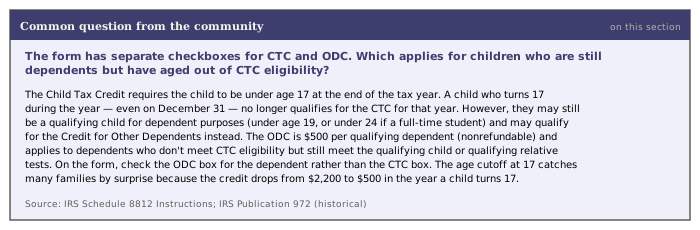
- The dependent must be under age 17 at the end of the tax year. This is stricter than the general qualifying child age test of under 19 (or under 24 for students). A 17-year-old qualifying child does not qualify for the CTC even though they're still a qualifying child for dependent purposes.
- The dependent must have a valid Social Security number issued before the due date of your return. As of 2025 (per OBBBA changes), the requirement was made permanent. ITINs do not qualify a child for the CTC. The SSN must be valid for employment.
- The dependent must be a US citizen, US national, or US resident alien.
- You (the taxpayer claiming the credit) must also have a valid SSN. On a joint return, at least one spouse must have a valid SSN. This is also an OBBBA change from prior law.
- Your modified adjusted gross income (MAGI) must not exceed the phase-out thresholds. The credit phases out at $50 per $1,000 of MAGI above $200,000 for single filers and $400,000 for married filing jointly. These thresholds were made permanent by OBBBA.
If all six conditions are met, check the CTC box. The actual credit amount gets calculated on Schedule 8812 and reported on Form 1040.
The Credit for Other Dependents Checkbox
The Credit for Other Dependents (ODC) is a $500 nonrefundable credit per qualifying dependent. It was created by the Tax Cuts and Jobs Act of 2017 and was made permanent by OBBBA in 2025. The ODC covers dependents who don't qualify for the CTC — usually because they're age 17 or older, or because they're qualifying relatives rather than qualifying children, or because they don't have a CTC-qualifying SSN.
To check the ODC box for a dependent, all of these must be true:
- The dependent must be your dependent under either the qualifying child or qualifying relative tests.
- The dependent must be a US citizen, US national, or US resident alien (with limited exceptions for residents of Canada or Mexico).
- The dependent must have a Taxpayer Identification Number (SSN, ITIN, or ATIN). ITINs are acceptable for ODC unlike for CTC.
- The dependent must not qualify you for the CTC. If they qualify for the CTC, you check the CTC box, not the ODC box.
- Your MAGI must not exceed the phase-out thresholds (same $200,000/$400,000 as CTC).
The ODC remains $500 per qualifying dependent and is nonrefundable, meaning it can reduce your tax liability to zero but cannot generate a refund. The CTC's refundable portion is what makes it more valuable for families with low tax liability.
Decision Points in the Dependents Section
- Determining whether a person counts as a dependent at all. This is the threshold decision. Work through the qualifying child tests first; if the person fits, they're a qualifying child. If not, work through the qualifying relative tests. If they fit neither, they're not a dependent and shouldn't be listed. People sometimes list relatives they support significantly but who don't pass the technical tests — this is incorrect and can trigger IRS scrutiny.
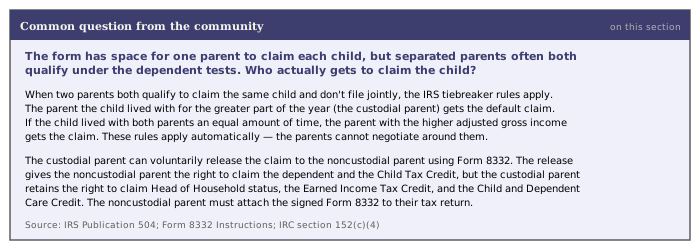
- Tiebreaker situations between potential claimers. Sometimes more than one taxpayer could claim the same person as a qualifying child. The IRS has specific tiebreaker rules: when two parents both qualify and don't file jointly, the parent the child lived with longer claims them (if equal time, the parent with higher AGI claims). When a parent and a non-parent both qualify, the parent claims unless the non-parent has higher AGI than the highest-AGI parent. When two non-parents both qualify, the one with higher AGI claims. These rules can't be negotiated between the parties; the tiebreaker determines who claims.
- The custodial parent's release. A custodial parent (the parent the child lived with for the greater part of the year) can release their claim to the noncustodial parent using Form 8332. This release lets the noncustodial parent claim the child for the dependency exemption (now mostly meaningless) and the Child Tax Credit, but the custodial parent retains the right to claim Head of Household status, the Earned Income Tax Credit, and the Child and Dependent Care Credit. This split is important and frequently misunderstood.
- Determining CTC versus ODC eligibility for each dependent. Walk through the CTC tests first for each dependent. If they meet all six conditions, check the CTC box. If they don't meet CTC but they're still a dependent under either qualifying child or qualifying relative tests, check the ODC box. If they don't qualify for either credit but are still a dependent, leave both checkboxes unchecked (this happens with some non-citizen dependents who are residents of Mexico or Canada and meet limited exceptions).
- Whether to list a dependent at all when MAGI is above phase-out. If your MAGI is well above the phase-out thresholds (the credit fully phases out at MAGI of approximately $240,000 single or $440,000 MFJ for one child), checking the CTC box doesn't generate credit. You should still list the dependent because the dependency claim itself affects other items on your return, but you may or may not check the credit box based on whether you receive any phased-down credit.
Career Path Applications for the Dependents Section
Different family and career situations interact with this section differently.
- Families with young children generally have the simplest dependents section. Each child under 17 with a valid SSN gets listed with the CTC box checked. The dependents section drives substantial tax benefit ($2,200 per child up to phase-outs).
- Families with children aging through 17. The year a child turns 17 is the year the credit drops from $2,200 (CTC) to $500 (ODC). Families should anticipate this so the smaller refund isn't a surprise.
- Families with college-age children. Children up to age 24 who are full-time students for at least five months of the year remain qualifying children for dependent purposes (under the age test exception). They qualify for ODC ($500) rather than CTC since they're over 17. Many parents of college students don't realize they can still claim them as dependents.
- Divorced or separated parents. The most common dependent-claim disputes happen here. Custody arrangements, separation agreements, and IRS tiebreaker rules all interact. Form 8332 (release of claim) is the formal mechanism for the custodial parent to give the noncustodial parent the right to claim the child for CTC and dependency. The custodial parent still claims HOH, EITC, and child care credit even after release. Coordination between parents is critical because both parents claiming the same child triggers IRS scrutiny and one return will be rejected.
- Adult children supporting parents. A parent who lives with you (or even doesn't live with you in some cases) may be your qualifying relative if you provide more than half their support and their gross income is below the threshold. The parent qualifies for ODC ($500) since they're not a qualifying child. Many adult children supporting elderly parents don't realize they can claim them as dependents.
- Multigenerational households. Households with multiple potential dependents (children, grandchildren, parents, siblings) need to work through which dependents you can claim. The tests apply individually to each person. Some may be qualifying children, some qualifying relatives, some not qualifying at all.
- Foster parents. Foster children placed with you by an authorized placement agency or court order are eligible as qualifying children if they meet the other tests. They qualify for CTC if under 17 with valid SSN. Foster care payments received from the placement agency aren't considered support you provided.
- Self-employed parents. The dependents section itself is the same regardless of how income is earned. But self-employed parents may face MAGI issues if business income pushes them near the phase-out thresholds. The phase-out at $200,000 single / $400,000 MFJ catches some successful self-employed families.
- Same-sex parents. Both parents in a marriage filing jointly can claim children together. In divorce or separation situations, the same custodial parent rules apply regardless of the parents' gender or the path through which they became parents (biological, adoption, or surrogacy).
Common Mistakes in This Section
- Claiming a person who doesn't pass the dependent tests. Especially common with adult relatives the filer supports financially but who don't meet the qualifying relative tests (often because the relative's gross income exceeds the threshold). Listing someone as a dependent who doesn't qualify is a common audit trigger.
- Wrong SSN for a dependent. Just as with the primary taxpayer's SSN, dependent SSN errors cause e-file rejections. Always copy from the dependent's actual Social Security card.
- Checking CTC box for a 17-year-old. A common error. The CTC requires under age 17 at year-end. A child who turned 17 during the year qualifies for ODC ($500) instead.
- Checking CTC box for a dependent without a valid SSN. ITINs do not qualify for CTC. Check ODC instead if the dependent has an ITIN and meets the other tests.
- Both parents claiming the same child after separation. When parents file separately and both claim the same child, the second return to be filed gets rejected by the IRS. The custodial parent has the default right; the noncustodial parent only gets the claim through Form 8332.
- Forgetting to list dependents who qualify for ODC. Many filers don't realize they can claim elderly parents, adult children, or other relatives as dependents and miss the $500 ODC plus any HOH eligibility implications.
- Not attaching Form 8332 when claiming a child whose custodial parent released the claim. The noncustodial parent claiming a child needs the signed Form 8332 attached to the return. Without it, the IRS rejects or modifies the claim.
- Confusing the dependent rules with state tax dependent rules. Some states have different dependent rules from federal. The Form 1040 dependents section follows federal rules.
Optimization Opportunities in This Section
- Verify each potential dependent against the actual tests. Many filers either miss claiming dependents they could claim (most often elderly parents or adult children in school) or claim dependents they shouldn't (most often relatives whose income exceeds the qualifying relative gross income threshold). Working through the qualifying child and qualifying relative tests carefully for each person you might claim is worth the time.
- Plan the CTC versus ODC transition. The year a child turns 17 is the year the credit drops from $2,200 to $500. Families with multiple children should anticipate which credit applies each year and plan withholding or estimated taxes accordingly.
- Coordinate dependent claims in divorced or separated households. The custodial parent claims by default. Form 8332 allows release to the noncustodial parent. The decision about who claims should be coordinated between parents because the IRS will reject the second-filed return that claims the same child. The credit value can be split (CTC release to noncustodial, HOH and EITC retained by custodial) when both parents would benefit from claiming some aspect.
- Time MAGI carefully when near phase-out thresholds. Families with MAGI near $200,000 single or $400,000 MFJ may benefit from MAGI-reducing strategies (additional 401(k) contributions, HSA contributions, certain deductions) to preserve more of the CTC. The savings can be substantial because each $1,000 of MAGI reduction at the phase-out threshold preserves $50 of credit per child.
- Don't forget non-child dependents for ODC. Elderly parents you support, adult disabled children, and other qualifying relatives generate $500 ODC each. Many filers don't realize they can claim these dependents and miss the credit entirely.
Connection to Other Sections
The dependents section feeds into multiple other parts of the return. The CTC and ODC amounts get calculated on Schedule 8812 and reported on Form 1040. The dependent claim affects HOH filing status eligibility (already covered in Lesson 1). The dependent claim affects the standard deduction calculation when the filer is themselves a dependent. The dependent claim affects eligibility for the Earned Income Tax Credit, the Child and Dependent Care Credit, education credits, and various other items throughout the return.
The income section that comes next is where you report your income. Some income items have specific interactions with the dependents section — for example, scholarship income for a dependent student affects whether they remain your qualifying child, and Social Security benefits received by a dependent parent affect whether they meet the qualifying relative gross income test (since most Social Security isn't included in gross income for that test).
What to Gather Before Filing This Section
- Social Security cards for each dependent (or ITIN documentation if applicable)
- Documentation of each dependent's relationship to you
- Documentation of where each dependent lived during the year if anyone challenges the residency test (school enrollment records, medical records, lease agreements showing dependent at your address)
- For any dependent you support, records of your support contributions during the year
- For divorced or separated parents, the custody arrangement documentation and Form 8332 if claiming a child whose custodial parent released the claim
- For dependents who had any income during the year, records of their gross income (to verify the qualifying relative gross income test if applicable)
Key Takeaways
- The IRS recognizes two categories of dependents — qualifying child (five tests: relationship, age, residency, support, joint return) and qualifying relative (four tests) — and the form assumes you've worked through these before filling in the table
- The Child Tax Credit ($2,200 per qualifying child under current law) requires the child to be under age 17 at year-end with a valid SSN — a qualifying child who is 17 or older qualifies only for the $500 Credit for Other Dependents
- ITINs do not qualify a child for the Child Tax Credit under current law — only a valid SSN issued before the return's due date qualifies
- The custodial parent claims the dependent by default — Form 8332 is the mechanism for releasing the CTC and dependency claim to the noncustodial parent, while the custodial parent retains HOH, EITC, and child care credit
- Non-child dependents (elderly parents, adult children in school, qualifying relatives) generate the $500 Credit for Other Dependents — many filers miss this by not realizing they can claim these dependents
- The One Big Beautiful Bill Act (signed July 2025) raised the CTC to $2,200 per qualifying child, made CTC and ODC permanent, and added a requirement that the claiming taxpayer also have a valid SSN
Quiz — 5 Questions
Answer one at a timeA child turns 19 in March of the tax year and is not a full-time student. Can they be a qualifying child for that year?