Three-Candle Patterns in Context — Stars, Soldiers, and Crows
Three-candle patterns tell a three-act story. This lesson shows morning star, evening star, three white soldiers, and three black crows in realistic price sequences — and explains why penetration depth, open position, and location determine whether the story ends in reversal or failure.
- Read a morning star in a price sequence and evaluate penetration depth on the third candle
- Read an evening star and identify what a weak versus strong third candle looks like
- Distinguish three white soldiers from a gapping rally by checking the open position of each candle
- Explain why three white soldiers after a consolidation differ from three soldiers late in an extended uptrend
- Apply the three-act structure — establishment, indecision, confirmation — to any star pattern
Morning star and evening star
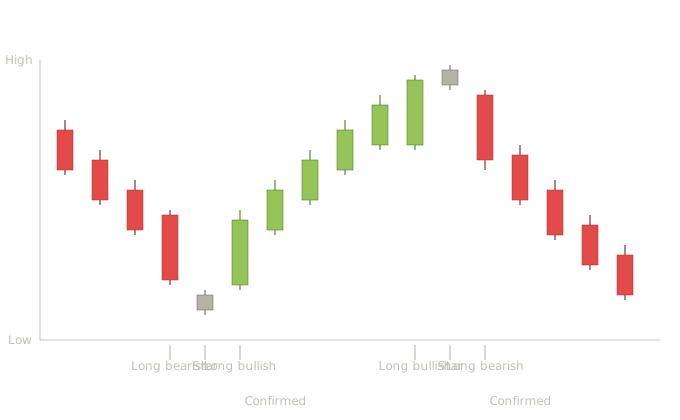
Morning star and evening star — the three-act reversal structure with confirmation built in
Three bearish candles establish a clear downtrend, with the fourth candle being a long bearish session — the most decisive selling so far. This is the first candle of the morning star, and its length matters: a long first candle shows that selling pressure was strong right up until the moment the pattern began to form. The next session opens lower and produces a small-bodied candle near the lows — this is the star. The small body shows that selling pressure has finally faltered; sellers couldn't extend the prior session's range. The third session opens higher and rallies strongly throughout the day, closing well into the body of the first candle. This third candle is structurally the confirmation built into the pattern. The next session continues higher — additional confirmation present. Recovery follows. Real-world takeaway: notice the penetration depth on the third candle. It closes well past the midpoint of the first candle's body, which is what makes this a strong morning star. A morning star where the third candle only barely pokes into the first body is technically the same pattern but a much weaker version. Students should specifically check how deeply the third candle penetrates the first — that depth is one of the best predictors of pattern strength.
The rally produces five bullish candles, with the fifth being a long bullish session — strong buying right at the top. The next session gaps higher and produces a small-bodied star near the highs — the star shows buyers couldn't extend the move. The third session opens lower and sells off throughout the day, closing well into the body of the first candle. The next two sessions continue lower — confirmation present. The reversal follows and a new downtrend begins. Real-world takeaway: evening stars at extended rally tops are among the most respected reversal signals in candlestick analysis, especially when the third candle penetrates deeply into the first. The three-act structure (establishment, indecision, confirmation) takes longer to form than two-candle patterns, which is both a strength and a weakness — strength because the confirmation is structural rather than waiting, weakness because by the time the pattern completes, a meaningful portion of the reversal may have already occurred.
Morning star and evening star teach the three-act reversal structure that recurs throughout candlestick analysis. The first candle establishes that the prior trend is still in force. The star shows that momentum has faltered without yet reversing. The third candle proves that the other side has taken control. Each candle plays a distinct role, and the pattern fails if any role isn't played correctly. The star itself is the most commonly misidentified candle. Students see a small-bodied candle after a long trend candle and want to call it a star. But the star's body must genuinely be small relative to the candles bracketing it. A medium-bodied candle between two long candles isn't a star — it's just a slightly smaller candle, and the pattern hasn't formed. The interpretive habit being trained: patterns with built-in confirmation candles (morning star, evening star, three inside up/down, three outside up/down) are generally more reliable than patterns requiring external confirmation. The structural requirement that the pattern itself proves the reversal removes a degree of judgment from the trader's hands. The tradeoff is timing — by the time these patterns complete, you've given up the first piece of the move.
Three white soldiers and three black crows
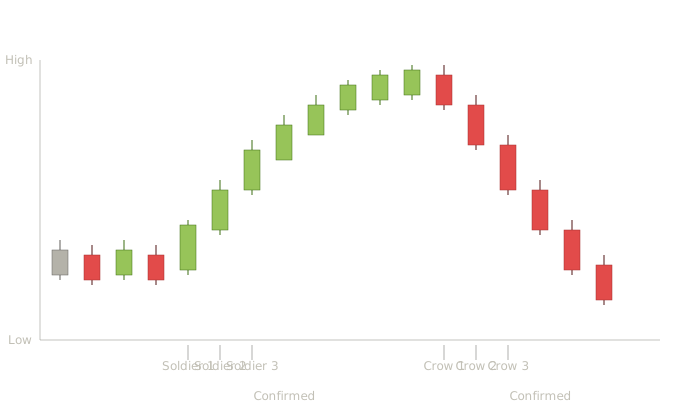
Three white soldiers after consolidation and three black crows after an extended advance
The chart opens with four sessions of choppy, directionless trading — small candles overlapping each other with no clear direction. This is the consolidation phase that often precedes meaningful moves. Then the pattern begins. Soldier 1 is a long bullish candle that opens within the consolidation range and closes well above it, breaking the sideways pattern. Soldier 2 opens within the body of soldier 1 — not above it, which would suggest a gap and overextension — and closes higher than soldier 1's close. Soldier 3 repeats the pattern: opens within soldier 2's body, closes higher still. Each candle is a long bullish session with a small or no upper shadow, indicating buyers closed near the highs of each session. The next sessions continue higher — confirmation present. A sustained uptrend follows. Real-world takeaway: three white soldiers emerging from a base or consolidation are generally regarded as among the most powerful bullish signals. The combination of breakout from indecision plus three consecutive strong buying sessions shows real participation. The location matters — three soldiers appearing late in an already-extended uptrend often mark exhaustion rather than continuation, which is the opposite of the signal students expect.
After the uptrend extends, three consecutive bearish candles form. Crow 1 opens at the prior high and closes well below the open with a meaningful body. Crow 2 opens within the body of crow 1 — not below it — and closes lower. Crow 3 repeats: opens within crow 2's body, closes lower still. Each crow has a small or no lower shadow, indicating sellers closed near the lows. The next sessions continue lower — confirmation present. A sustained decline follows. Real-world takeaway: three black crows after an extended advance are widely regarded as a strong reversal signal, mirroring three white soldiers in interpretation. The same caution applies — three crows late in an already-extended decline can mark capitulation rather than continuation.
Three white soldiers and three black crows teach the sustained-pressure principle. Most candlestick patterns rely on a single decisive session to signal reversal or continuation. These two patterns rely on three consecutive sessions of one-sided pressure, which is qualitatively different evidence. One strong session can be an overreaction; three in a row is participation. The structural requirements matter. Each candle must open within the prior body, not above it (for soldiers) or below it (for crows). Opens above the prior high or below the prior low create gaps, which suggest the move is accelerating beyond sustainable pace. The 'open within prior body' requirement is what makes the pattern look orderly rather than panicked — and orderly moves tend to continue, while panicked moves tend to reverse. The interpretive habit being trained: read the opens carefully, again. Three bullish candles in a row isn't automatically three white soldiers — the open positions determine whether the pattern is what students think it is. Three candles where each opens above the prior high are a gapping rally, which has different implications than three soldiers.
Key Takeaways
- Morning star: the three-act structure is establishment (long bearish candle), indecision (small star), confirmation (long bullish candle closing deep into the first body). Each candle plays its role or the pattern hasn't formed
- Penetration depth on the third candle is the single best predictor of morning/evening star quality — deep penetration means strong conviction; shallow penetration means the signal is technically present but weak
- The star must be genuinely small relative to the candles flanking it. A medium-bodied candle between two long candles is not a star
- Three white soldiers: each candle opens within the prior candle's body, not above it. Opens above the prior high create a gapping rally — a different pattern with different implications
- Three white soldiers after consolidation signal powerful breakout. Three white soldiers late in an already-extended uptrend can signal exhaustion — location determines which reading applies
Quiz — 3 Questions
Answer one at a timeA morning star forms in a downtrend. The third candle is a moderate bullish candle that closes at exactly the midpoint of the first candle's body. A second morning star forms later; this time the third candle closes near the first candle's open. Which morning star is stronger and why?