Three Inside and Three Outside in Context — Extended Patterns with Built-In Confirmation
Three inside up is harami + confirmation. Three outside up is engulfing + confirmation. This chart shows both patterns in a realistic price sequence — and demonstrates that the meta-principle reduces the memorization burden.
- Identify three inside up in a chart by tracing the harami parent pattern plus its confirming third candle
- Identify three outside up by tracing the bullish engulfing parent plus its confirming third candle
- Explain the trade-off between acting on the two-candle parent and waiting for the three-candle child
- Apply the meta-principle: knowing the parent pattern makes the child pattern automatic
Three inside up and three outside up
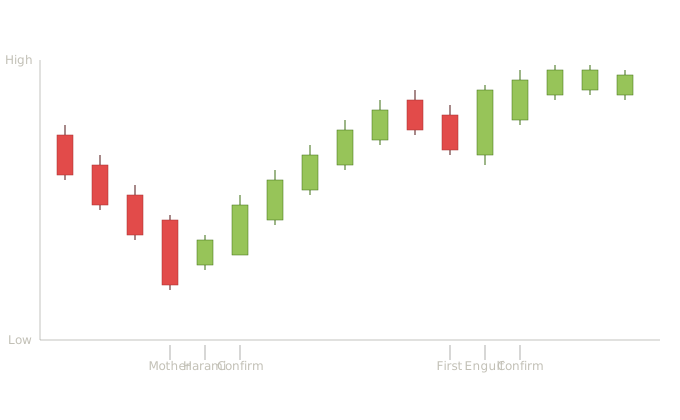
Three inside up confirmed, three outside up confirmed — both patterns in a realistic price sequence showing the parent pattern plus the built-in confirming candle
Three bearish candles establish the downtrend, with the fourth being a long bearish candle — the mother. The next session is a small bullish candle whose body sits entirely inside the mother's body. This is the harami you already know from Chart 6. On its own, the harami is a pause signal requiring confirmation. The third candle is that confirmation, built structurally into the pattern: a bullish candle that closes above the mother's open. The pattern completes with the third candle, and the trend reverses from there. The next sessions continue higher, providing additional follow-through. Real-world takeaway: three inside up is essentially a harami pattern with the confirmation requirement built in. Students who learned to wait one extra session on harami patterns get this pattern for free — they're doing the same thing, just with a name attached to the completed sequence. The advantage of recognizing it as a named pattern is that it forces the discipline of waiting; students see "three inside up" in completed form and remember the confirmation was structurally required, not optional.
After the recovery extends and a brief decline begins, the three outside up pattern forms. The first candle is a small bearish candle continuing the decline. The second candle is a bullish candle that opens below the first candle's close and closes above the first candle's open — a bullish engulfing pattern. On its own, the engulfing is generally regarded as a reasonably strong signal. The third candle provides additional confirmation: another bullish candle closing higher than the second. The next sessions continue higher. Real-world takeaway: three outside up is essentially a bullish engulfing pattern with a confirmation candle added. Like three inside up, it converts an external-confirmation pattern into a self-confirming one. The trade-off is the same — you wait one extra session, you give up some of the initial move, but you reduce the probability of acting on a pattern that fails before confirmation.
Three inside up and three outside up demonstrate a meta-principle that students should internalize: many three-candle patterns are two-candle patterns with structural confirmation added. Three inside up is harami + confirmation. Three outside up is engulfing + confirmation. Morning star, which you saw in Chart 8, has a similar three-act structure though built differently — establishment, indecision, confirmation. Recognizing this family relationship reduces the apparent memorization burden. Students who feel overwhelmed by the number of named patterns can collapse much of the list by understanding that the three-candle patterns are mostly built from the two-candle patterns they already know, with the confirmation candle structurally required rather than left to discretion. The interpretive habit being trained: when a three-candle pattern includes its own confirmation, you generally don't need to wait another session before acting. The pattern's third candle has already done the waiting for you. Compare this to bare harami or bare engulfing patterns, where the confirmation is external and you genuinely need to wait one more session. Knowing which patterns require external confirmation versus which include it structurally is one of the most practical pieces of knowledge in candlestick analysis.
Key Takeaways
- Three inside up: the harami creates the condition; the third candle closing above the mother's open is the confirmation built into the pattern — no external confirmation session needed
- Three outside up: the bullish engulfing signals the shift; the third candle closing higher confirms follow-through — same structural logic, different parent
- The trade-off: waiting for the three-candle version gives up the first piece of the move but eliminates the ambiguity of acting on a two-candle pattern that hasn't proven itself
- The meta-principle: three inside is harami + proof; three outside is engulfing + proof — knowing the parent makes the child automatic
Quiz — 3 Questions
Answer one at a timeIn the chart, three inside up forms after a sustained downtrend. A student asks: could they have entered at the close of the harami (second candle) instead of waiting for the third? What is the trade-off?