Estate, HUF, and Inheritance Planning
Will preparation and probate; HUF formation, coparceners, and partition under Section 47; succession across Hindu, Muslim, Christian, and Parsi personal laws; nominee vs legal heir distinction and 2015 Insurance Act amendment; gift tax under Section 56(2)(x) with strategic uses; inherited cost basis and April 2001 FMV option under Section 55(2)(b); trust structures including specific and discretionary trusts; joint holdings and survivorship rights; and family settlement deeds for inter-generational wealth transfer
- Understand why estate planning matters in India despite the absence of inheritance, estate, and wealth taxes — including the documentation, succession law, and income tax implications that require careful planning
- Prepare a legally valid will, understand registration and probate requirements, and calculate the tax treatment of assets received by beneficiaries under Section 49(1)
- Form and manage a Hindu Undivided Family (HUF) correctly — including eligible religions, coparcener rights post-2005 amendment, tax filing mechanics, and the Section 47(i) tax-free partition rules
- Apply the nominee vs legal heir distinction correctly across bank accounts, insurance, demat, and property — including the 2015 Insurance Act change for beneficial nominees
- Use Section 56(2)(x) gift exemptions for specified relatives strategically to shift income to lower-bracket family members while avoiding Section 64 clubbing
- Establish cost basis for inherited assets using Section 49(1) carry-over and the April 2001 FMV option under Section 55(2)(b), and maintain documentation to protect heirs from unnecessary capital gains tax
Estate, HUF, and Inheritance Planning
Estate planning is the deliberate organization of your financial affairs to ensure your wealth transfers to chosen beneficiaries efficiently, with minimum tax friction and family conflict. Unlike countries with substantial inheritance or estate taxes, India presents a different planning landscape — there's no inheritance tax, no estate tax, no gift tax for transfers to specified relatives. But there are substantial tax implications around the income generated by inherited assets, the cost basis carry-over rules, the choice between individual and HUF holdings, and the structure of trusts for special-needs beneficiaries.
The absence of inheritance tax in India creates planning opportunities that don't exist in countries like the US or UK. Family wealth can transfer across generations with relatively low friction if structured properly. But "structured properly" requires careful attention to documentation, succession law (which varies by religion in India), nomination versus inheritance distinctions, and tax positions of future income streams. Poor estate planning frequently leads to family disputes, frozen assets, and tax disputes that consume years and significant value.
This lesson covers the comprehensive estate planning framework: will preparation, HUF formation and management, succession law differences across personal laws, the nominee versus legal heir distinction (a frequent source of confusion), trust structures, joint ownership planning, and the tax mechanics that govern inter-generational wealth transfer. Earlier lessons touched on inheritance (Lesson 18 for general life events, Lesson 20 for cost basis under Section 49), HUF (Lesson 21 for tax planning), and disabled beneficiaries (Lesson 19). This lesson goes substantially deeper into the estate planning dimensions.
A reminder: this lesson uses Income Tax Act 1961 references applicable to FY 2025-26 income filed as AY 2026-27, alongside the Indian Succession Act 1925, Hindu Succession Act 1956, and Indian Trusts Act 1882.
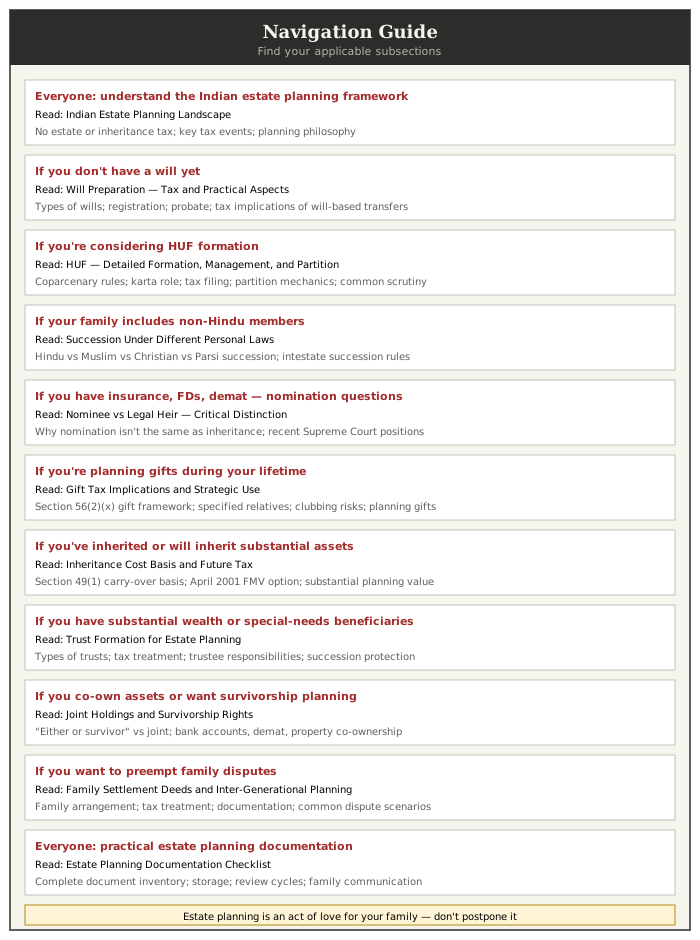
Navigation guide — which subsections apply to your situation
Indian Estate Planning Landscape
The Indian estate planning framework differs substantially from common Western frameworks. Understanding the differences shapes effective planning.
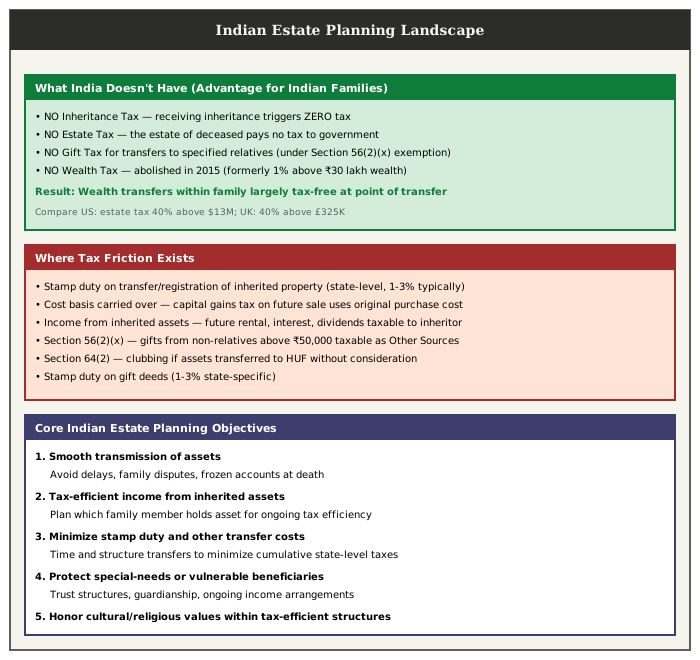
Why estate planning matters even without estate tax.
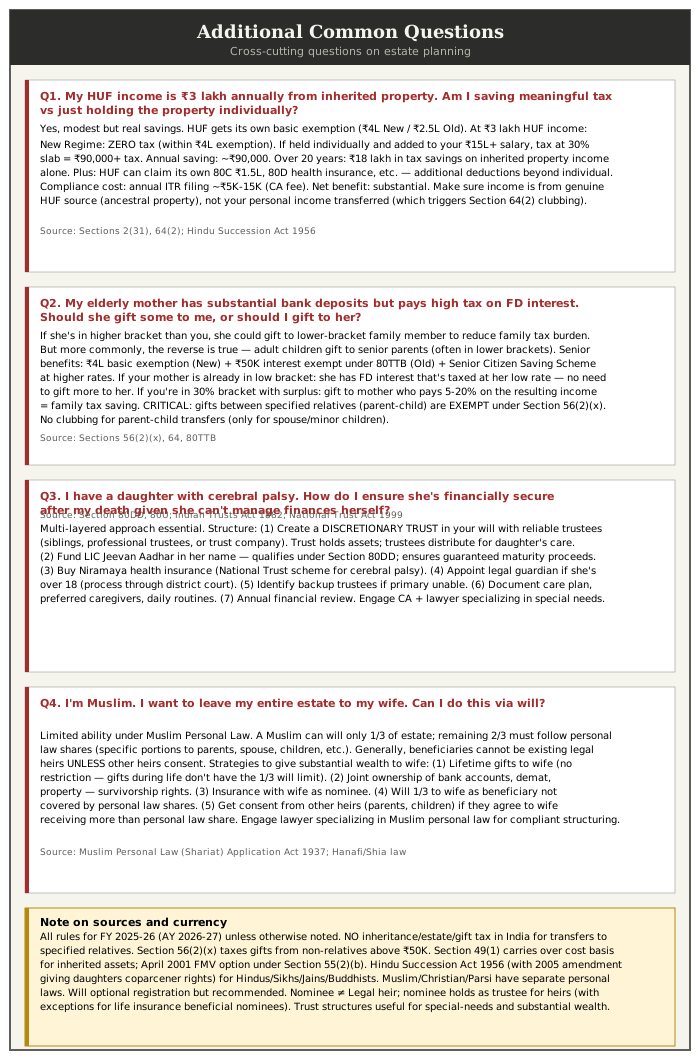
Many Indians think "no estate tax = no need for planning." This is a critical misunderstanding. Without proper planning:
- Frozen assets. Bank accounts, demat accounts, mutual funds often freeze at death pending legal process. Family may wait months to access funds for daily needs.
- Family disputes. Without clear will, heirs may dispute shares, leading to years of litigation. Property may be physically divided in unhelpful ways.
- Stamp duty paid twice. Successive transfers (deceased → heir → next sale) each attract stamp duty. Direct will-based transfer saves intermediate duty.
- Tax inefficiency. Wrong heir receives high-income asset, paying more tax than necessary. Strategic allocation across family saves substantial future tax.
- Missed Section 49 benefits. Without proper documentation of original cost basis, heirs may pay capital gains tax on entire sale value (instead of just appreciation).
- Loss of business continuity. Family business may stop without smooth succession plan.
Various Indian succession laws; Section 56(2)(x), 49, 64 of Income Tax Act 1961.
Will Preparation — Tax and Practical Aspects
The will is the foundational estate planning document.
Types of wills in India.
Unprivileged will. The standard will most people write. Must be:
- Written (handwritten or typed)
- Signed by testator (person making will)
- Attested by 2+ witnesses
- Witnesses cannot be beneficiaries
Privileged will. For armed forces personnel in active service or mariners at sea. Less formal requirements.
Holograph will. Wholly in testator's handwriting, signed. Some courts give more weight to these.
Joint will. Two people (usually spouses) write a single will. Generally not recommended due to complexity.
Mutual will. Two related wills with mutual provisions. Each can be revoked separately.
Will registration.
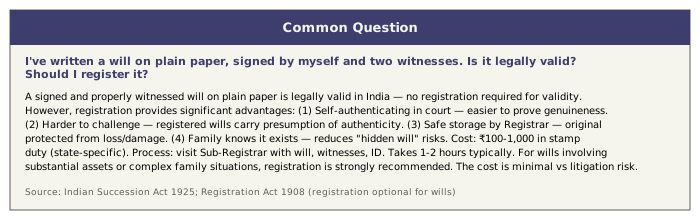
Registration is OPTIONAL in India (unlike property registration). But registered wills are:
- Harder to challenge
- Self-authenticating in court
- Stored safely with Registrar
- Stamp duty applicable: state-specific (₹100-₹1,000 typically)
Process to register a will:
- Visit Sub-Registrar's office in your jurisdiction
- Carry will, witnesses, ID proof, fee
- Pay registration charges
- Original deposited with Registrar; certified copy returned
Probate.
Probate is court certification that a will is genuine and grants the executor authority. Required for wills made or referring to assets in:
- Kolkata, Mumbai, Chennai metropolitan areas — mandatory for Hindus
- Other areas — optional but recommended for complex estates
Probate process:
- Petition filed in High Court
- Newspaper notice to potential challengers
- 6-12 months typically
- Court fees: 2-5% of estate value (substantial for large estates)
Will contents — practical structure.
Essential elements:
- Testator details, capacity statement
- Revocation of previous wills
- Asset inventory and beneficiary allocation
- Executor appointment (person who carries out the will)
- Guardian appointment for minor children
- Specific bequests (jewelry to particular relative, etc.)
- Residuary clause (catches remaining unspecified assets)
- Signatures with date and witnesses
Tax implications of will-based transfers.
When beneficiaries receive assets via will:
- No income tax at receipt (inheritance is not income)
- Stamp duty applies on property transfer (state-specific)
- Cost basis carries over from deceased (Section 49(1))
- Holding period includes deceased's holding
- Future income from assets is beneficiary's taxable income
Indian Succession Act 1925; Registration Act 1908; Section 49(1) of Income Tax Act 1961.
HUF — Detailed Formation, Management, and Partition
Lesson 21 introduced HUF for tax planning; here we go deeper into structural mechanics.
The HUF concept.
A Hindu Undivided Family (HUF) is a separate "person" under Indian tax law. It's recognized by Hindu personal law and treated as a tax-paying entity under the Income Tax Act. The structure traces back to traditional joint family arrangements but works within modern tax framework.
Eligibility for HUF.
Only certain religions/groups:
- Hindus (including all sub-sects, Brahmo Samaj)
- Sikhs
- Jains
- Buddhists
- Excluded: Muslims, Christians, Parsis, Jews (their personal laws don't recognize HUF concept).
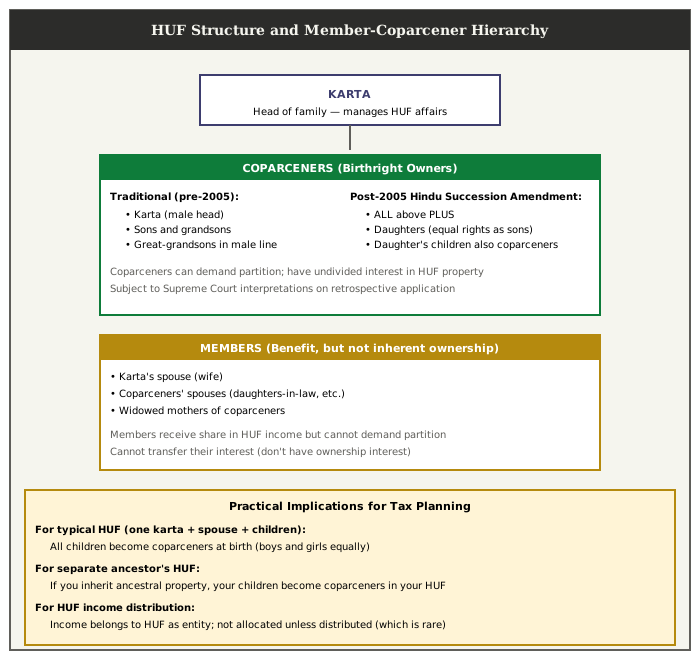
Members and coparceners.
Members. All family members (karta, spouses, children, etc.).
Coparceners. Those with birthright to ancestral property — traditionally only males; after 2005 amendment, also females.
Members get share in income distribution; coparceners have inherent ownership rights and can demand partition.
HUF formation — practical steps.
- Get HUF deed prepared (notarized).
- Apply for PAN in HUF's name (Form 49A specifying HUF).
- Open HUF bank account (PSU banks typically; PAN required).
- Identify and document HUF's corpus source: ancestral property inherited (most common), gift from non-family member to HUF, income from HUF business — NOT karta's personal earnings or salary (would trigger Section 64(2) clubbing).
- Maintain separate books for HUF.
- File annual ITR (ITR-2 or ITR-3 depending on income type).
HUF tax filing.
| Item | Treatment |
|---|---|
| Income source | HUF's own assets (ancestral or HUF-acquired) |
| Tax slabs | Same as individual (₹4L New / ₹2.5L Old basic exemption) |
| Deductions | All Chapter VI-A deductions in own name |
| Section 87A | NOT available for HUF (only individuals) |
| Filing form | ITR-2 (no business) or ITR-3 (business) |
| Audit | Same thresholds as individuals |
HUF partition.
When family wants to divide HUF assets among members:
Full partition. HUF dissolved entirely; assets distributed per coparcener shares. After partition, HUF ceases to exist for tax purposes.
Partial partition. Not recognized for tax purposes since 1980 amendment. If done, HUF continues for tax with same assessment.
Tax treatment of partition.
Under Section 47(i), distribution of HUF property at partition is NOT a transfer for tax purposes:
- No capital gains at partition
- Coparceners receive their share without tax
- Cost basis for received assets = HUF's cost basis
After partition:
- Each coparcener individually owns their share
- Future income from these assets is individual's taxable income
- Original HUF dissolved
Common HUF mistakes.
- Mistake 1: Transferring personal income to HUF. Triggers Section 64(2) clubbing. The income comes back to your individual return.
- Mistake 2: HUF without legitimate income source. Tax department questions; substance over form analysis.
- Mistake 3: Treating HUF assets as personal. Mixing personal and HUF transactions in same account creates evidentiary problems.
- Mistake 4: Inadequate documentation. Without proper HUF deed, asset trail, member acknowledgments, HUF status can be challenged.
Hindu Succession Act 1956 (with 2005 amendment); Sections 2(31), 47(i), 64(2) of Income Tax Act 1961.
Succession Under Different Personal Laws
India has personal laws for different religious communities. Estate planning must consider applicable personal law.
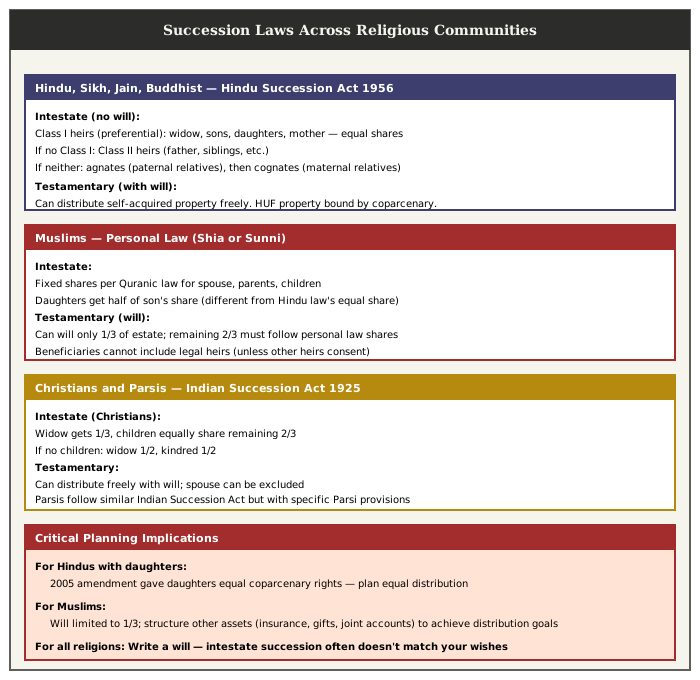
Hindu Succession Act 1956 (2005 amendment); Indian Succession Act 1925; Muslim Personal Law (Shariat) Application Act 1937.
Nominee vs Legal Heir — Critical Distinction
One of the most misunderstood areas of Indian estate planning.
The fundamental distinction.
A NOMINEE is a person designated to RECEIVE assets at your death — primarily for operational purposes (banks can release funds to a known recipient).
A LEGAL HEIR is a person who is ENTITLED to inherit assets — under will or succession law.
These are NOT the same thing.
A nominee receives assets but holds them as TRUSTEE for legal heirs. Legal heirs can claim from nominee. Nominee is not the owner; just the recipient.
Why this distinction matters.
Imagine: You name your spouse as nominee on bank FD. You have a will leaving FDs to your children. You die. Bank releases FD to spouse (nominee) But will gives FD to children (legal heirs) Spouse is legally bound to transfer FD to children If spouse refuses, children must sue If you'd intended spouse to keep the FD, the will should reflect that. If nominee and will disagree, the will typically prevails (with some exceptions).
Different asset types — different rules.
Bank accounts. Nominee receives at death. Holds as trustee for legal heirs unless will specifies otherwise. Banking Regulation Act provisions.
Insurance policies. Nominee receives proceeds at death. Insurance Act gives nominee certain rights. "Beneficial nominee" (parents, spouse, children) has ownership-like rights post 2015 amendment. For other nominees, hold as trustee.
Demat accounts (shares, MFs). Nominee receives at death. Holds as trustee for legal heirs. Similar to bank accounts.
Property. Property transfers per will (or intestate succession). Nomination doesn't apply directly to property. Joint ownership with survivorship works differently.
EPF, PPF, NPS. Nominee receives. Specific provisions vary.
The 2015 Insurance Act amendment.
For life insurance specifically:
- "Beneficial nominees" (parent, spouse, child) have entitlement, not just receipt
- These nominees receive proceeds beneficially — not as trustee
- Significant change from earlier interpretation
For other nominees, traditional trustee rule applies.
Best practice.
- Update nominations on ALL accounts (banks, demat, MFs, insurance, EPF, PPF, NPS)
- Make nominees consistent with will provisions
- Communicate clearly to family
- Review nominations after major life events (marriage, divorce, births, deaths)
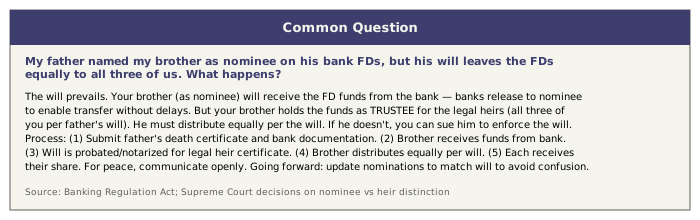
Banking Regulation Act 1949; Insurance Act 1938 (2015 amendment); Companies Act 2013; various Supreme Court decisions distinguishing nominee from heir.
Gift Tax Implications and Strategic Use
Gifts can be powerful estate planning tools — but require understanding tax framework.
Section 56(2)(x) — The gift framework.
Gifts received from non-relatives are taxable as "Income from Other Sources" if aggregate exceeds ₹50,000 in a year.
Gifts from "specified relatives" are exempt regardless of amount.
Who are "specified relatives" under Section 56(2)(x).
- Spouse
- Brother or sister
- Brother or sister of spouse
- Brother or sister of either parent
- Lineal ascendant or descendant (parents, grandparents, children, grandchildren, etc.)
- Lineal ascendant or descendant of spouse
- Spouse of any of the above relatives
Strategic gifting opportunities.
Strategy 1: Gift to parents to use their lower tax bracket.
Parents in lower tax bracket (or zero tax) can hold investment assets you gift to them. Investment income flows to parents at their tax rate. For senior parents with low income, this saves substantial family tax.
You're in 30% bracket. Gift ₹50 lakh to retired father (zero tax bracket). Father invests in FDs at 7% Annual interest: ₹3.5 lakh Father pays ZERO tax (within his exemption) If you had held the investment: ₹3.5L × 30% = ₹1.05 lakh annual tax Annual family tax saving: ₹1.05 lakh
Strategy 2: Avoid clubbing trap with siblings/parents.
Section 64 (clubbing) applies only to transfers to spouse or minor children. Gifts to parents, siblings, adult children: NO clubbing.
So tax-efficient asset shifting works through:
- Adult children with lower tax brackets
- Senior parents with low income
- Adult siblings in lower brackets
Strategy 3: Gift before substantial asset appreciation.
When an asset is expected to appreciate substantially, gifting before appreciation:
- Recipient bears future appreciation
- Future capital gains tax is at recipient's rate
- Reduces eventual estate to plan for
Tax documentation for gifts.
- Gift deed (recommended for substantial gifts, especially property)
- Bank transfer trail
- Stamp duty (state-specific for gift deeds, 1-3% typically)
- Receiver retains documentation showing source
Sections 56(2)(x), 64 of Income Tax Act 1961.
Inheritance Cost Basis and Future Tax
The interaction between inheritance and future capital gains tax is critical for planning.
The carry-over basis rule (Section 49(1)).
When you inherit a capital asset:
- Your cost basis = previous owner's actual cost
- Your holding period includes previous owner's holding
- Future capital gain = sale price - inherited cost basis
Why this matters.
Inherited property bought by grandfather in 1990 for ₹3 lakh. Sold by you in 2025 for ₹2 crore. Without proper documentation: Tax department may assume zero cost, taxing entire ₹2 crore. With proper documentation: Original cost ₹3 lakh OR April 2001 FMV (say ₹15 lakh, often more beneficial) Indexation applies if you choose 20% with indexation route Or 12.5% without indexation on entire gain
The April 2001 FMV option.
Under Section 55(2)(b), for assets acquired (by previous owner) BEFORE April 1, 2001:
- You can use FMV as of April 1, 2001 as cost basis
- OR actual cost
- Choose whichever is higher (gives lower gain)
Establishing April 2001 FMV.
For property:
- Government circle rate (state-specific records) for area
- Comparable transactions in 2001
- Registered valuer's report
For shares of pre-2001 acquired companies:
- Stock market price April 1, 2001
- For unlisted: balance sheet basis
For gold:
- Government gold price April 1, 2001 (~₹4,300 per 10 grams)
Cost basis documentation essentials.
Maintain forever:
- Original purchase deed/agreement
- Stamp duty receipts
- Registration receipts
- Brokerage notes (for shares)
- Cost of improvement documentation
- Property valuations if relevant
Pass these to heirs along with asset. Lost documentation can mean paying tax on entire sale value instead of just appreciation.
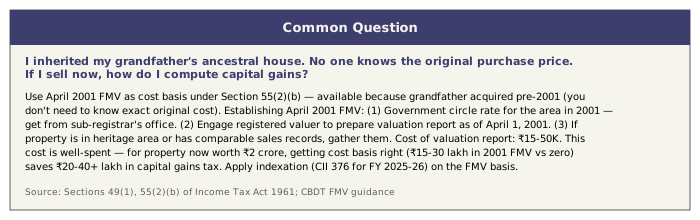
Sections 49(1), 55(2)(b) of Income Tax Act 1961.
Trust Formation for Estate Planning
Trusts provide structured asset management across generations or for specific beneficiaries.
What is a trust.
A trust is a legal arrangement where:
- A SETTLOR transfers assets to a TRUSTEE
- Trustee holds assets for benefit of BENEFICIARY
- Trust deed specifies terms
- Indian Trusts Act 1882 governs private trusts
Types of trusts.
Specific (private) trusts.
- Single beneficiary or small group
- Common for family arrangements
- Tax treatment: income flows through to beneficiary
Discretionary trusts.
- Trustees have discretion over distributions
- Beneficiaries don't have fixed entitlement
- Trust is taxable entity at maximum marginal rate (37% + cess)
- Used for asset protection, special-needs beneficiaries
Charitable trusts.
- Public benefit purpose
- Tax exemption under Section 11/12 if registered
- Different framework (covered later in this lesson briefly)
When trusts make sense for estate planning.
- Use case 1: Special-needs beneficiary. Disabled child who cannot manage finances. Trust holds assets; trustees distribute for child's care.
- Use case 2: Minor beneficiary protection. Inheritance for young children held in trust until they reach specified age.
- Use case 3: Spendthrift protection. Beneficiary may not manage money well; trust controls distribution.
- Use case 4: Asset protection. Trust structure may protect assets from beneficiary's creditors (with appropriate structuring).
- Use case 5: Multi-generational wealth. Long-term family trust spans generations.
Tax treatment of private trusts.
Specific trust (single/known beneficiary):
- Income taxed at beneficiary's slab rate
- Treated as flow-through
Discretionary trust:
- Income taxed at trust level at maximum marginal rate (37% + cess)
- Distributions to beneficiaries not taxed again
- Significant tax disadvantage
Trust deed essentials.
- Settlor identification
- Initial corpus contribution
- Trustees appointment (typically 2-3)
- Beneficiaries identification
- Trust purpose and scope
- Distribution rules
- Trustee powers and limitations
- Trust duration
- Succession of trustees
Trust registration.
- Trust deed stamped per state stamp law (0.5-1% typically)
- Registered under Indian Trusts Act
- PAN obtained for trust
- Bank account opened
Common Indian trust planning pattern.
For middle-class families:
- Will is sufficient for most situations
- Trust adds value primarily for special-needs or substantial wealth situations
For wealthy families:
- Trust structure can preserve family wealth across generations
- Provides governance framework
- Worth the compliance overhead
Indian Trusts Act 1882; Sections 161, 164, 11-13 of Income Tax Act 1961.
Joint Holdings and Survivorship Rights
A practical estate planning tool through co-ownership.
Joint bank accounts.
| Type | Operation | Death Treatment |
|---|---|---|
| Either or Survivor | Either holder can operate | Survivor automatically owns |
| Anyone or Survivor | Any one operates | Survivor owns |
| Former or Survivor | Specified person operates first | At their death, next person |
| Latter or Survivor | Specified person operates only | Other survives at death |
Crucially: "Either or Survivor" means survivor automatically owns funds at first holder's death. Other legal heirs cannot claim from survivor (typically).
Demat account joint holding.
Similar concept:
- Joint holders have equal access
- Survivor inherits at death of first holder
- Simpler than going through probate/succession process
Property joint ownership.
For property:
- Joint registration with specified shares (50-50, 60-40, etc.)
- At death of one owner, share doesn't automatically pass to other
- Will or succession law determines share's transfer
- (Unlike joint bank accounts, where survivor automatically gets full amount)
Exception: Joint tenancy with rights of survivorship. Available in some specific situations; less common in Indian property law than Western jurisdictions.
Tax implications.
For joint bank accounts/FDs:
- Interest income split per agreed share
- Each holder reports proportionate share in own ITR
- Without clear agreement, usually 50-50
For joint property:
- Each owner reports their share of rental income
- Capital gains computed per share at sale
- Joint deductions (24(b), 80C) per share
Strategic use for estate planning.
- Joint bank accounts: smooth fund access for surviving spouse
- Joint demat: surviving spouse retains investment access
- Joint property: tax planning + survivorship convenience
Cautions.
- Joint holdings can complicate will-based distribution
- Disputes can arise about whose contribution funded what
- Once added as joint holder, removal may require legal process
Banking Regulation Act; Companies Act 2013 (demat); various property law statutes.
Family Settlement Deeds and Inter-Generational Planning
A documented agreement among family members for asset distribution.
What is a family settlement.
A family settlement deed (also called family arrangement) is a written agreement among family members documenting:
- Distribution of family assets among members
- Settlement of any disputes
- Future obligations
- Tax-efficient way to organize family wealth
When family settlements help.
- Resolving disputes before they become litigious
- Documenting verbal agreements over generations
- Tax-efficient transition of ancestral property
- Preventing future challenges
Tax treatment.
Family settlements typically don't trigger capital gains tax IF:
- It's genuine settlement of pre-existing rights (not a transfer)
- Documents existing arrangements rather than creating new ones
- Has economic substance, not just tax avoidance
Documentation showing it's a settlement vs transfer is critical.
Common uses.
Father acquires ancestral property. Three sons. Family settlement documents distribution among sons. Each son becomes owner of their share without it being treated as taxable transfer.
Siblings disagree about will interpretation. Family settlement clarifies and finalizes distribution. Avoids litigation.
Family business succession through settlement deed allocating shareholdings, management responsibilities, profit sharing among family members.
Practical implementation.
- Engage CA + lawyer
- All family members must agree and sign
- Notarize and register the deed
- File with relevant authorities
- Stamp duty applicable per state
Various family settlement case law; Section 47 read with judicial interpretations.
Estate Planning Documentation Checklist
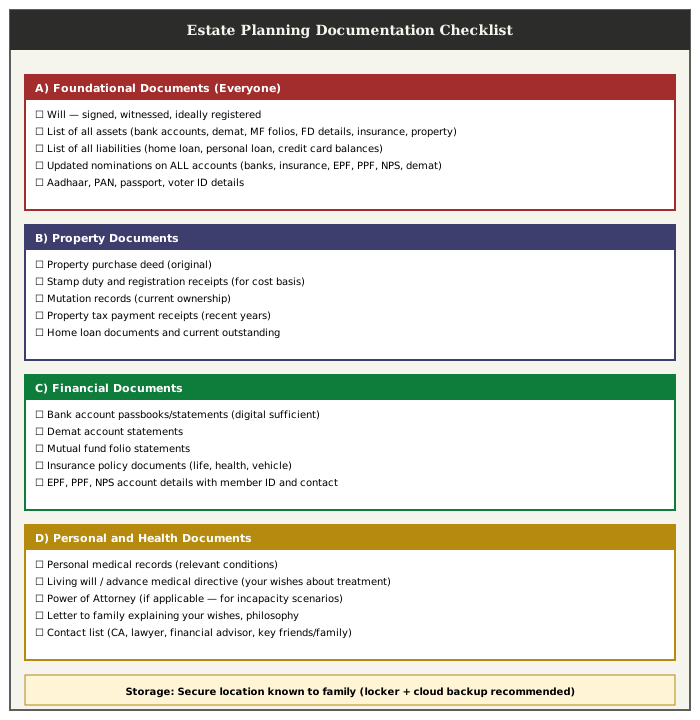
What every adult should have documented.
Family communication.
Documents are useless if family doesn't know they exist or where to find them. Best practices:
- Tell trusted family member where documents are stored
- Provide access instructions (locker key, password manager access)
- Update annually
- Make at least one family member familiar with structure
Review cycle.
- Major life events (marriage, divorce, birth, death): immediate update
- Annual review: verify nominations, beneficiary details, valuations
- Tax law changes: review will and structures for continued efficiency
General estate planning best practices; Indian Succession Act 1925.
Key Takeaways
- India has no inheritance tax, estate tax, or wealth tax — but estate planning still matters for preventing frozen assets, family disputes, stamp duty inefficiency, and future income tax on inherited assets.
- A valid will requires written form, testator's signature, and 2+ witnesses. Registration is optional but makes the will harder to challenge. Probate is mandatory in Kolkata, Mumbai, and Chennai.
- HUF is available only to Hindus, Sikhs, Jains, and Buddhists. After the 2005 amendment, daughters are coparceners with birthright to ancestral property. Section 47(i) makes HUF partition tax-free.
- A nominee is not the same as a legal heir — a nominee receives assets for operational purposes but holds as trustee for legal heirs unless the 2015 Insurance Act beneficial nominee rules apply.
- Gifts to specified relatives are fully exempt under Section 56(2)(x). Section 64 clubbing applies only to spouse and minor children — gifts to parents, adult children, and siblings carry no clubbing risk.
- Inherited assets carry over the previous owner's cost basis under Section 49(1). For pre-April 2001 assets, Section 55(2)(b) allows using April 2001 FMV as cost basis — maintain original cost documentation and pass it to heirs.
- Family settlement deeds for distribution of ancestral property typically don't trigger capital gains if they document pre-existing rights rather than create new transfers.
Quiz — 5 Questions
Answer one at a timeUnder Section 47(i), what is the tax treatment when HUF property is distributed at partition among coparceners?