Recordkeeping
Why documentation supports scrutiny defense, Section 49 cost basis, and succession; complete document categories by type; retention periods — 6 years general, 10 years Section 148 reassessment, 17 years Black Money Act, permanent for property and wills; digital-physical hybrid storage with DigiLocker; annual folder structure with YYYY-MM-DD naming conventions; pre-filing AIS reconciliation and common gaps; recovery procedures for lost Form 16, property deeds, investment receipts, and capital gains documents; family and professional access protocols; estate-ready documentation package with six sections; 3-2-1 backup rule; and a sustainable weekend-by-weekend implementation approach
- Identify how long to retain each document type — applying the 6-year general rule, 10-year Section 148 window, 17-year Black Money Act exposure, and permanent retention requirements for property and estate documents
- Set up a digital-physical hybrid storage architecture using DigiLocker, cloud services, and bank safe deposit lockers — with naming conventions and folder structure for systematic retrieval
- Execute the pre-filing documentation routine — collecting Form 16, downloading Form 26AS, AIS, and TIS, reconciling AIS items, and identifying the five most common pre-filing gaps
- Recover missing documents — lost Form 16 (via TRACES), property deeds (via sub-registrar), investment records (via RTAs and AMCs), and bank statements (institution requests)
- Build an estate-ready documentation package — a six-section consolidated record covering personal information, assets, liabilities, tax history, contacts, and wishes
- Implement a sustainable recordkeeping practice using the three-weekend foundation approach, quarterly reviews, and the annual pre-filing routine
Recordkeeping
The 24 lessons before this one covered tax law, planning strategies, and compliance procedures. This final lesson covers the foundation that makes all of those work in practice: documentation. Tax positions are only as defensible as the records supporting them. A perfectly computed Section 54 exemption falls apart if you can't produce the original property purchase deed. A legitimate ₹4 lakh home loan interest deduction becomes a notice if your home loan interest certificate is missing. A clear capital loss to carry forward becomes worthless if you didn't file ITR in the loss year.
Indian tax recordkeeping has specific challenges. The general statute of limitations is 6 years for normal scrutiny — but Section 148 reassessment can reach 10 years for substantial cases, and Black Money Act has 17-year exposure for undisclosed foreign assets. Property documentation needs to survive multiple generations because of carried-over cost basis rules under Section 49. Personal documents like Aadhaar, PAN, and disability certificates need ongoing maintenance with periodic renewals. A systematic recordkeeping approach saves money, time, and stress during tax events — and protects family members who may need to navigate your tax affairs after your death.
This capstone lesson covers the practical recordkeeping framework that supports everything else in the curriculum: what to keep, how long to keep it, organization systems for both digital and physical records, recovery strategies for common documentation gaps, and the family communication that ensures records remain accessible when needed. The goal is a sustainable system you can actually maintain — not theoretical perfection that nobody follows.
A reminder: this lesson uses Income Tax Act 1961 references applicable to FY 2025-26 income filed as AY 2026-27.
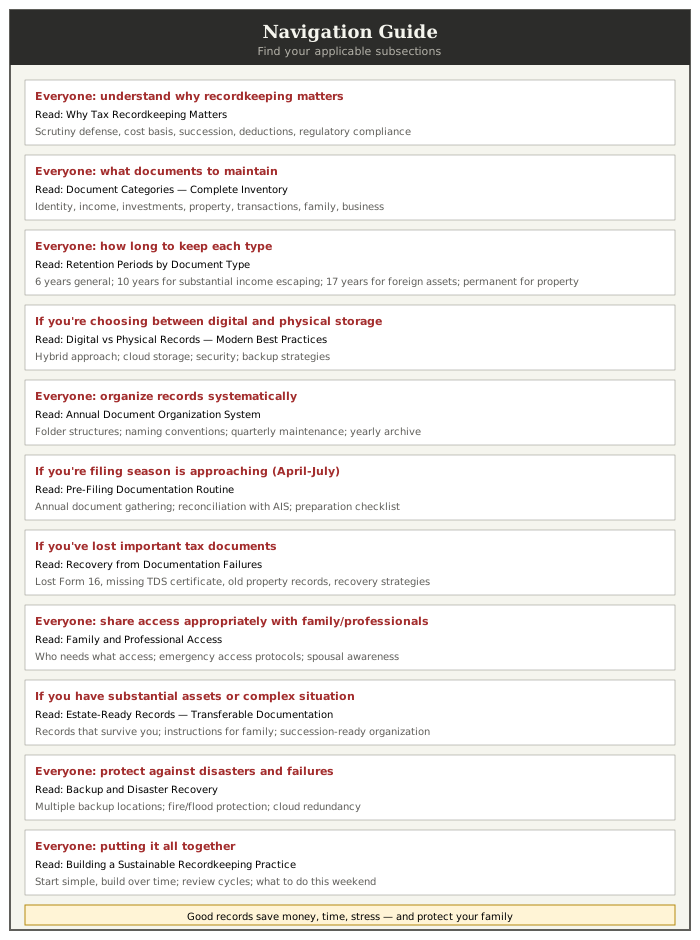
Navigation guide — which subsections apply to your situation
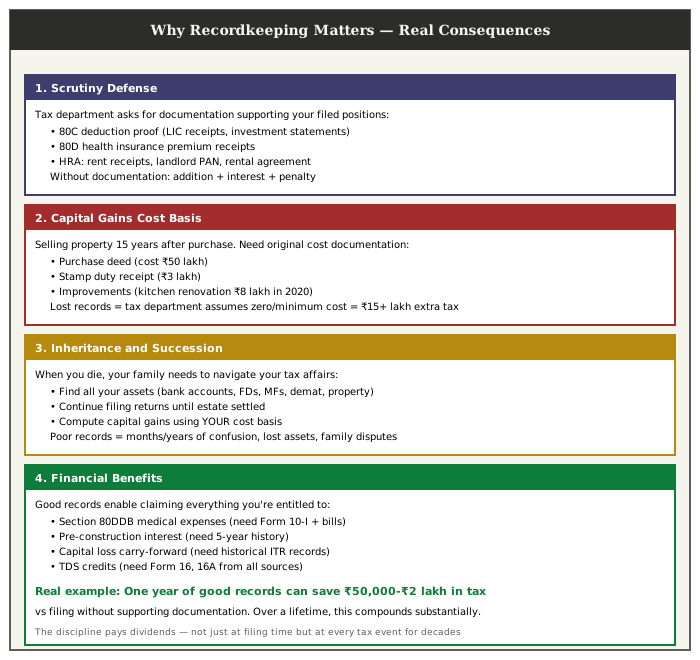
Why Tax Recordkeeping Matters
The practical consequences of good or poor recordkeeping.
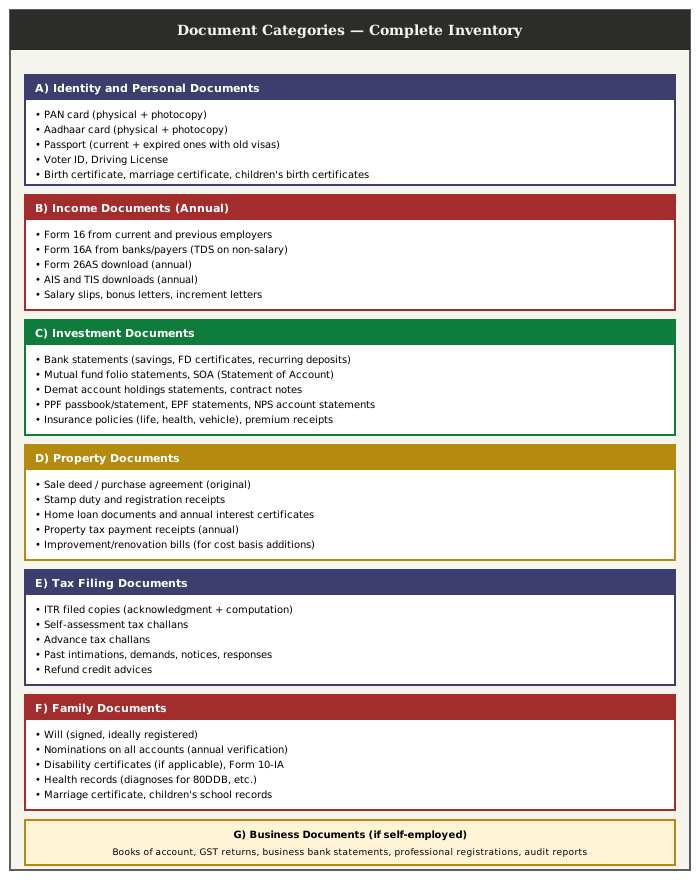
Document Categories — Complete Inventory
What documents should you maintain? Organized by category for systematic coverage.
General tax compliance practice; CBDT documentation guidance.
Retention Periods by Document Type
How long to keep what — based on tax law and practical needs.
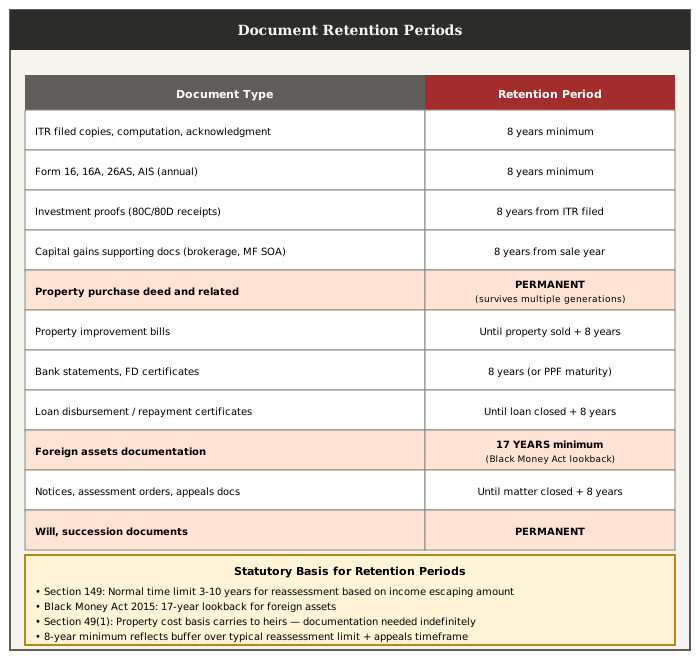
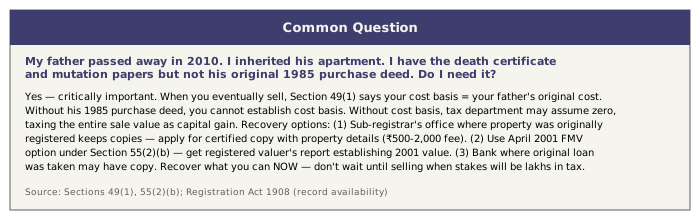
Sections 49(1), 55(2)(b), 149 of Income Tax Act 1961; Black Money Act 2015.
Digital vs Physical Records — Modern Best Practices
The contemporary approach is hybrid — combining digital primary storage with physical backup for critical documents.
The hybrid approach.
Always physical:
- Original property deeds
- Original will (signed in ink)
- Original birth/death/marriage certificates
- Stock physical certificates (if any, rare now)
- Original loan documents
- Insurance policy bonds
Always digital:
- Bank/MF/demat statements (these come digital anyway)
- Form 26AS, AIS, TIS downloads
- ITR copies and acknowledgments
- Tax challans, payment receipts
Hybrid (both physical and digital scan):
- PAN card, Aadhaar
- Form 16, Form 16A
- Insurance policy documents
- Loan agreements
- Major investment proofs
Digital storage architecture.
A practical setup:
- Primary: Cloud service (Google Drive, OneDrive, iCloud Drive, DigiLocker)
- Secondary: External hard drive (annual backup)
- Tertiary: Encrypted backup at second location (family member's house, bank locker)
DigiLocker — government-backed option.
DigiLocker is the government's official digital document repository:
- Free, government-issued
- Integrated with PAN, Aadhaar, driving license, vehicle registration
- Linked to Aadhaar for authentication
- Accepted by government agencies as valid
For Indian filers, DigiLocker is increasingly essential for:
- Aadhaar e-KYC
- PAN linked documents
- Vehicle RC
- Educational certificates
- Other government documents
Security considerations for digital storage.
- Strong passwords + two-factor authentication
- Encrypted backups
- Separate password manager (not stored with documents)
- Regular review of access logs
- Trusted contact for emergency access
Physical storage best practices.
- Bank safe deposit locker for irreplaceable originals
- Fireproof safe at home for frequently needed documents
- Organized filing system (by year + category)
- Annual review and disposal of expired documents
General digital security practices; DigiLocker documentation; Income Tax Department guidance.
Annual Document Organization System
A practical year-round system for maintaining records.
Folder structure (digital).
Naming conventions.
Use date prefix YYYY-MM-DD for chronological sorting:
Tax Records/ ├── FY 2025-26/ │ ├── Income/ │ ├── Investments/ │ ├── Deductions/ │ ├── Capital Gains/ │ ├── Notices Received/ │ └── ITR Filed/ ├── FY 2024-25/ │ └── (same structure) ├── Property/ │ ├── Purchase Documents/ │ ├── Tax Payments/ │ └── Improvements/ ├── Permanent Records/ │ ├── PAN, Aadhaar copies/ │ ├── Birth/Marriage Certificates/ │ └── Will and Estate Docs/ └── Family/ └── (similar structure for spouse, parents if managed)
- 2025-06-15_HDFC_FD_Receipt.pdf
- 2025-07-20_HealthInsurance_Policy.pdf
- 2026-01-15_Form16_TechCo.pdf
This naming sorts naturally in file explorers and is easy to find later.
Quarterly maintenance routine.
End of each quarter:
- Move that quarter's receipts and documents to organized folders
- Backup to secondary storage
- Verify no obvious gaps (missing months of bank statements, etc.)
- 15-30 minutes effort
Annual maintenance (April after FY ends).
- Compile previous FY documents fully
- Download annual statements from banks, brokers
- Download Form 26AS, AIS, TIS
- Archive previous year, start new FY folder
- 2-3 hours effort
Pre-filing maintenance (June-July).
- Final reconciliation before ITR filing
- Gather all Form 16s, deduction proofs
- Generate consolidated capital gains statement
- 3-5 hours effort
General organizational practices; tax compliance frameworks.
Pre-Filing Documentation Routine
The specific actions to take in the weeks before ITR filing.
Timeline (assuming July 31 deadline).
June (1-2 months before).
- Collect Form 16 from current employer
- Collect Form 16 from previous employer if changed jobs
- Download annual MF, demat statements
- Compile bank interest certificates
Early July.
- Download Form 26AS from incometax.gov.in
- Download AIS (Annual Information Statement)
- Download TIS (Taxpayer Information Summary)
- Compile health insurance, LIC, other 80D/80C receipts
Mid-July.
- Reconcile income from all sources
- Verify TDS in Form 26AS matches your tracking
- Reconcile high-value transactions in AIS
- Compute self-assessment tax if any
Late July.
- File ITR
- E-verify (within 30 days)
- Pay any self-assessment tax
- Save acknowledgment and computation
The AIS reconciliation step.
This is critical and often missed. AIS contains:
- Dividends received
- Mutual fund redemptions
- Property registrations
- High-value cash deposits/withdrawals
- Foreign remittances
- Many other transactions
If AIS shows transactions not in your ITR, mismatch notice likely. Reconcile each AIS item:
- Match to your records
- Verify amount and date
- Include in ITR if missed
- File feedback if AIS data is incorrect
Common pre-filing gaps.
- Missing bank interest from minor accounts (forgotten old FDs)
- Capital gains from automatic MF SIP redemptions
- Dividends not declared (assumed they're tax-free, but they're not)
- Foreign exchange income from old foreign trips
- Interest on income tax refunds (taxable as Other Sources)
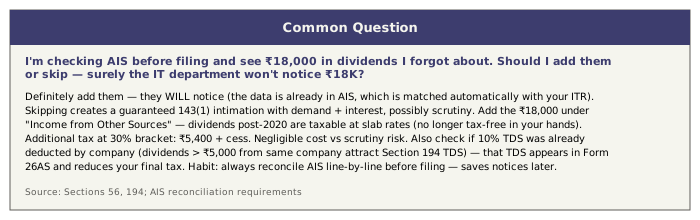
ITR filing procedures; AIS feature documentation; Section 143(1) auto-processing.
Recovery from Documentation Failures
What to do when documents are lost or missing.
Lost Form 16 from previous employer.
Options:
- Contact former employer's HR or payroll department — they can re-issue
- Most companies retain Form 16 records for 8+ years
- If company has shut down, contact the TRACES portal — Form 16 generated by deductor accessible to you via your TRACES login
- Use Form 26AS to verify TDS, even without Form 16 in hand
Missing TDS certificates from banks.
Options:
- Bank can re-issue (charges may apply, ₹100-500)
- Form 26AS already captures TDS; certificates are supporting documentation
- For ITR claim, Form 26AS data is what matters
Old property documents lost.
Options:
- Sub-registrar's office: apply for certified copy with property address, registration year
- Cost: ₹500-2,000 typically; takes 15-30 days
- Bank where original loan taken may have copy
- Society where flat located may have copy of original sale deed
Missing investment receipts (LIC, MF, etc.).
Options:
- LIC: re-issue available with policy number
- Mutual funds: download SOA (Statement of Account) anytime from RTAs (CAMS, KFintech) or AMC websites
- Bank deposits: re-print certificates available
- All investment records reconstructible from institution
Lost capital gains supporting documents.
Options:
- Brokerage account: download annual statements going back years
- Mutual fund: long-history SOA available
- For very old transactions, may need to estimate using: historical NSE/BSE data; April 2001 FMV for pre-2001 acquisitions
Bank statements for past years.
Options:
- Most banks provide 7-10 year history; older requires paid request
- Cost: ₹100-500 per year/account
- Take time (15-30 days typically)
Various institutional record retention policies; TRACES portal documentation.
Family and Professional Access
Ensuring records are accessible when needed.
Who needs what access.
Spouse:
- Should know: location of all critical documents, basic financial picture, key contacts
- Should have access to: ongoing financial accounts (joint operation), insurance policies
- Should NOT necessarily have: every detail of every account (privacy)
Adult children:
- Should know: existence of will, general financial situation, who to contact
- Should have access to: communication contacts (CA, lawyer) if needed
- Should NOT have access to: active financial accounts (unless specifically intended)
CA / Tax consultant:
- Should have access to: all documents needed for ITR filing, scrutiny, planning
- Annual document handover or secure shared folder
- Bound by professional confidentiality
Lawyer (estate planning):
- Has copy of will and trust documents
- Should know location of original signed will
- Contact info accessible to family
Emergency access protocols.
Document a single "Emergency Access" document containing:
- List of all major accounts with institution names (not necessarily passwords)
- Insurance policy numbers
- Location of will (physical copy + digital copy if any)
- Key contact information: CA, lawyer, financial advisor, banker
- Critical asset locations: bank lockers, safes, etc.
- Important deadlines and recurring obligations
Store this:
- Physical copy with spouse + one other trusted person
- Sealed envelope with lawyer or in safe deposit locker
- Digital copy with secure password access
Password management.
For digital records:
- Use a password manager (LastPass, 1Password, Bitwarden)
- Master password known to spouse (in sealed envelope at lawyer's office)
- Two-factor authentication on critical accounts
- Recovery codes printed and stored physically
General estate planning practices; digital security frameworks.
Estate-Ready Records — Transferable Documentation
Records organized so they can be picked up and used by family after your death.
The "first hour" test.
If something happened to you today, would your spouse/family find:
- Your most recent ITR within 1 hour?
- List of all your investments and accounts?
- Insurance policy numbers and contact details?
- Will and its location?
- Property documents?
- Key contacts (CA, lawyer, banker)?
If not, your records aren't estate-ready.
Estate documentation package.
A consolidated package containing:
Section 1: Personal information.
- Birth, marriage, citizenship details
- PAN, Aadhaar copies
- Passport and visa history
Section 2: Asset inventory.
- Bank accounts (name, branch, account number, type)
- Demat and MF accounts (folio numbers, institution)
- Fixed deposits (institution, maturity date, amount)
- Property (address, registration details, value)
- Insurance policies (insurer, policy number, sum assured)
- EPF, PPF, NPS account details
- Foreign assets (if any)
Section 3: Liability inventory.
- Home loans (lender, outstanding amount, EMI date)
- Personal loans, credit card balances
- Other obligations
Section 4: Tax history.
- ITR copies for past 5+ years
- Major notices and their resolution
- Ongoing tax matters (if any)
Section 5: Contacts and access.
- CA name and contact
- Lawyer name and contact
- Banker contact
- Financial advisor
- Key family members and their contacts
Section 6: Wishes.
- Will (or its location)
- Specific bequests
- Funeral preferences
- Charitable wishes
- Letter to family if desired
Update cycle.
- Major life events: immediate update
- Annual review: minor updates, verification
- 5-year comprehensive review: rebuild package
Estate planning best practices.
Backup and Disaster Recovery
Protecting against fire, flood, theft, hardware failure.
The 3-2-1 backup rule.
Standard backup philosophy:
- 3 copies of critical data
- 2 different storage media (e.g., hard drive + cloud)
- 1 off-site location (away from primary)
For tax records:
- Primary: Computer hard drive or main cloud
- Secondary: External hard drive (annual update)
- Off-site: Different cloud service or physical location
Physical document protection.
For irreplaceable originals (property deeds, will, etc.):
- Fireproof safe at home (UL-rated for documents)
- Bank safe deposit locker
- Spread risk: don't keep everything in one location
Cloud redundancy.
Two cloud services reduce single-point-of-failure:
- Primary: Google Drive / OneDrive / iCloud
- Secondary: Different provider (Dropbox, pCloud, etc.)
- Important documents in both
- Cost: free tiers available; ₹100-500/month for substantial storage.
Disaster scenarios to plan for.
Scenario 1: House fire.
- All physical documents at home destroyed
- Recovery: cloud copies + bank locker copies
- Verify: can you continue filing taxes? Banking?
Scenario 2: Hardware failure (laptop crash).
- Local digital copies lost
- Recovery: cloud backup
- Verify: when did you last back up?
Scenario 3: Lost phone.
- Authentication, banking apps inaccessible
- Recovery: phone backup, alternative authentication methods
- Verify: two-factor backup codes accessible elsewhere?
Scenario 4: Identity theft.
- Documents misused for fraudulent transactions
- Response: immediate IT department notification, police complaint, account freezing
- Prevention: monitor AIS for unusual activity
Annual disaster recovery review.
Once a year (e.g., birthday), test:
- Can you find your most recent ITR?
- Can your spouse access digital records if needed?
- Are physical originals where you remember?
- Have you tested cloud backup recovery?
General data protection practices; disaster recovery frameworks.
Building a Sustainable Recordkeeping Practice
How to actually implement this without overwhelming yourself.
Start where you are.
Don't try to organize 20 years of records this weekend. Instead:
Weekend 1: Foundation (4-6 hours).
- Create digital folder structure
- Locate all your existing documents
- Sort into rough categories
- Save what you have in basic structure
Weekend 2: Current year (3-4 hours).
- Focus on FY 2025-26 (current year) records
- Gather all available documents
- File systematically
- Note gaps to address
Weekend 3: Previous year (3-4 hours).
- Compile FY 2024-25 records
- Reference previously filed ITR
- Note what's missing for recovery
Ongoing weekly (15-30 minutes).
- File current week's receipts and documents
- Quick scan of pending items
- Maintain rather than catch up
Quarterly (2-3 hours).
- Comprehensive folder review
- Backup verification
- Address documentation gaps
Annually (4-6 hours).
- Year-end document gathering
- Pre-filing preparation
- Estate package update
Building habits.
- Set calendar reminders for quarterly reviews
- Create a "tax inbox" for incoming documents
- File immediately rather than letting documents pile up
- Make it as easy as possible for yourself
For families with managed records.
If one spouse handles tax matters:
- Other spouse should know basic structure
- Annual review together (1-2 hours)
- Both should know emergency access protocols
Engaging a CA for documentation.
Some CAs offer comprehensive document management services:
- Annual document compilation
- Pre-filing reconciliation
- Cloud-based shared access
- Cost: ₹10,000-50,000 annually
- Worth it for filers with complex situations or substantial assets.
What to do this weekend.
Three actions to start your recordkeeping system:
- Create a "Tax Records" folder structure on your computer/cloud
- Locate your last 3 years of ITR copies and file them properly
- Compile a one-page list of all your accounts/policies with key details
These three steps put you ahead of most filers.
Practical implementation guidance; financial planning frameworks.
End of lesson — Additional common questions
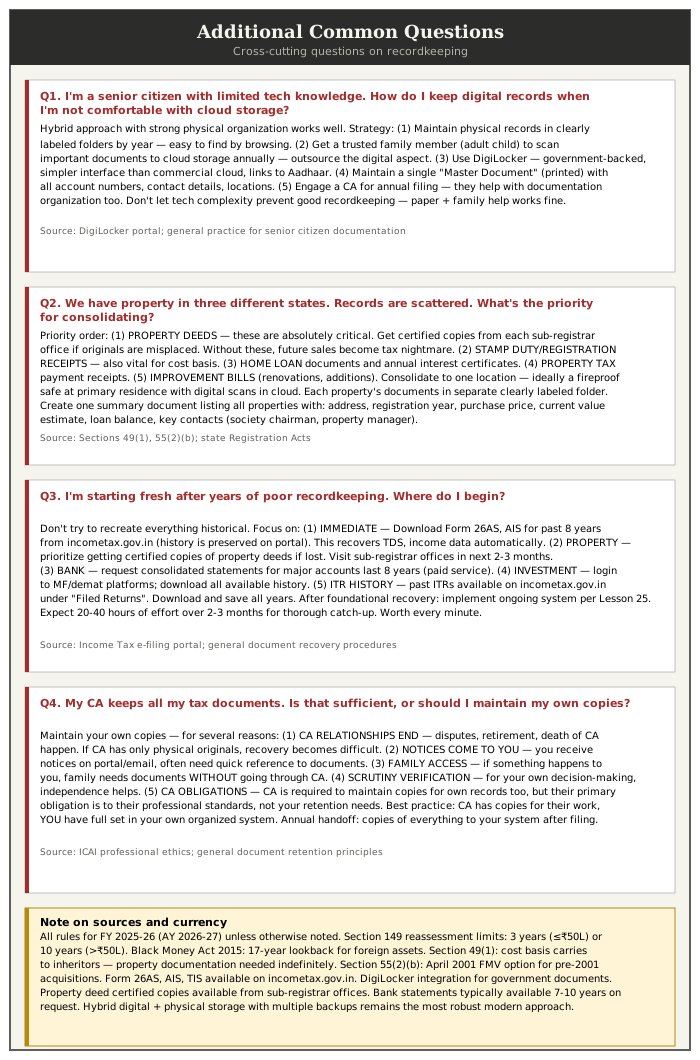
Key Takeaways
- The general scrutiny statute of limitations is 6 years; Section 148 reassessment extends to 10 years for substantial cases; Black Money Act exposure is 17 years for undisclosed foreign assets — retention periods must match these timelines
- Property documents must survive indefinitely because Section 49 carried-over cost basis rules require the original purchase price records — potentially across multiple generations of inheritance
- The hybrid approach assigns three tiers: always physical (property deeds, will signed in ink, birth/death/marriage certificates); always digital (bank statements, Form 26AS, ITR copies); hybrid both (PAN, Form 16, loan agreements, insurance policies)
- DigiLocker is the government's free, Aadhaar-authenticated official repository — integrated with PAN, driving license, and vehicle registration — and is increasingly accepted by government agencies as valid documentation
- AIS reconciliation is critical before filing: unreconciled AIS items (dividends, MF redemptions, property registrations, high-value transactions) generate mismatch notices automatically under Section 143(1)
- Lost Form 16 from a closed employer is recoverable via TRACES portal; lost property deeds via sub-registrar certified copy (₹500-2,000, 15-30 days); all investment records are reconstructible from RTAs, AMCs, and institutions
- The estate documentation package must pass the "first hour test" — a family member should be able to locate the last ITR, all investment details, insurance contacts, will location, and property documents within one hour
- The 3-2-1 backup rule: 3 copies of critical data, 2 different storage media, 1 off-site location — tested annually on a fixed calendar date
Quiz — 6 Questions
Answer one at a timeWhat is the reassessment window under Section 148 for substantial income cases (beyond the general 6-year scrutiny window)?